Saturday, April 16, 2011

Too Old to Start Exercising?


Picture Credit: www.goodtoknow.co.uk

Moderate Exercise Dramatically Improves Brain Blood Flow in Elderly Women

A new study presented at the Experimental Biology annual meeting, held from April 9 to 13 in Washington, D.C. suggests that it's never too late for women to reap the benefits of moderate aerobic exercise.

Rong Zhang, M.D., from the Texas Health Presbyterian Hospital in Dallas, and colleagues examined whether moderate exercise over a three-month period increased cerebral blood flow (CBF) in sedentary women aged 60 or older.

An individualized training program was designed for eight women (average age 70) according to their fitness levels. Training started with thirty minutes of exercise at base pace heart rate three times a week, and increased to 50 minutes at base pace heart rate four times a week, plus two sessions of 30 minutes at maximal steady-state heart rate in the third month.

Color Doppler and 2D ultrasonography were used to measure CBF in both the left and right internal carotid arteries.

The researchers found that, at the end of the training, CBF increased by 24% and 14 % in the left and right internal carotid arteries, respectively, and maximal oxygen consumption (VO2 max) increased by 13 %.

The participants' average blood pressure decreased by 4 percent, which was correlated with a slight decrease in the heart rate.

Blood Flow and the Brain

A steady, healthy flow of blood to the brain achieves two things.

First, the blood brings oxygen, glucose and other nutrients to the brain, which are vital for the brain's health.

Second, the blood washes away brain metabolic wastes such as amyloid-beta protein released into the brain's blood vessels. Amyloid-beta protein has been implicated in the development of Alzheimer's disease.

Dr. Zhang stresses the importance of the finding that improvement in brain blood flow is possible in one's senior years. "We often start to see a decline in brain perfusion and cognitive function in the 60s and 70s. That's when the downward trajectory starts. We want to see how much we can do to reverse or delay that process."

Source: Experimental Biology Meeting (EB 2011) Press Release

Friday, April 15, 2011

Preventing Heartburn During Pregnancy


Picture Credit: webmd.com

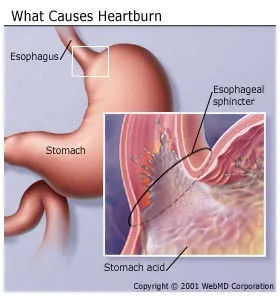
Heartburn (acid reflux) is a common complaint during pregnancy and tends to occur more frequently as your pregnancy progresses.

What Causes Heartburn During Pregnancy

There are two main reasons why heartburn and, to a lesser extent, indigestion are common during pregnancy. Firstly, increased levels of the hormone progesterone in your body causes muscles to relax. These include the lower oesophageal sphincter at the entrance to the stomach.

When the lower oesophageal sphincter relaxes at inappropriate times, food and stomach acids can reflux back up into your oesophagus and irritate the lining, causing heartburn.

During the latter stages of pregnancy, your growing baby puts pressure on the intestines and the stomach. The pressure on the stomach may also push contents back up into the oesophagus.

Though you may not be able to eliminate heartburn completely, there are some simple steps you can take to minimize your discomfort.

Strategies to Ease Heartburn Symptoms during Pregnancy

The American College of Gastroenterology offers the following tips:

- Wear loose-fitting clothes. Clothes that fit tightly around your waist put pressure on your abdomen and the lower oesophageal sphincter.

- Eat smaller meals. Overfilling the stomach can result in acid reflux and heartburn.

- Don’t lie down after eating. Wait at least 3 hours after eating before going to bed. When you lie down, it’s easier for stomach contents (including acid) to back up into the oesophagus, particularly when you go to bed with a full stomach.

- Raise the head of the bed 4 to 6 inches. This can help reduce acid reflux by decreasing the amount of gastric contents that reach the lower oesophagus.

- Avoid tobacco and alcohol. Abstinence from alcohol and smoking can help reduce reflux symptoms and avoid foetal exposure to potentially harmful substances.

The Zestzfulness Team also recommends that you take your time eating your meals and chew thoroughly.

Caffeine in your coffee, tea, cola can relax the lower oesophageal sphincter and allow acid to reflux back into the oesophagus. You may want to avoid or reduce their intake.

Remember to bend at the knees instead of at the waist. Bending at the waist puts more pressure on your stomach. Sit upright in a comfortable chair rather than slouching.

Antacids like Zellox-II may prove helpful in relieving heartburn problems but you should always check with your doctor before taking any over-the-counter remedies while pregnant.

Wednesday, April 13, 2011

Learning From A Kid


Picture Credit: img.ezinemark.com

Anh Hà Minh Thành là người Việt Nam hiện đang công tác trong lực lượng cảnh sát Nhật Bản; Hiện anh Hà Minh Thành đang tham gia cứu nạn động đất tại vùng Fukushima… Nhấn vào đây để biết thêm

OK, we don’t understand Vietnamese too. So here's a translation by NAM editor, Andrew Lam, author of East Eats West: Writing in Two Hemispheres. [His first book, Perfume Dreams, Reflections on the Vietnamese DIaspora won a 2006 Pen Award.]

It’s about a letter written by a Vietnamese immigrant, working in Fukishima as a policeman to a friend in Vietnam, which has been circulating on Facebook among the Vietnamese diaspora. It is an extraordinary testimony to the strength and dignity of the Japanese spirit, and an interesting slice of life near the epicenter of Japan’s current crisis, the Fukushima nuclear power plant.

Brother,

How are you and your family? These last few days, everything was in chaos. When I close my eyes, I see dead bodies. When I open my eyes, I also see dead bodies. Each one of us must work 20 hours a day, yet I wish there were 48 hours in the day, so that we could continue helping and rescuing folks.

We are without water and electricity, and food rations are near zero. We barely manage to move refugees before there are new orders to move them elsewhere.

I am currently in Fukushima, about 25 kilometers away from the nuclear power plant. I have so much to tell you that if I could write it all down, it would surely turn into a novel about human relationships and behaviors during times of crisis.

The other day I ran into a Vietnamese-American. His name is Toan. He is an engineer working at the Fukushima 1 nuclear plant, and he was wounded right at the beginning, when the earthquake struck. With the chaos that ensued, no one helped him communicate with his family. When I ran into him I contacted the US embassy, and I have to admit that I admire the Americans’ swift action: They sent a helicopter immediately to the hospital and took him to their military base.

But the foreign students from Vietnam are not so lucky. I still haven't received news of them. If there were exact names and addresses of where they work and so on, it would be easier to discover their fate. In Japan, the police do not keep accurate residential information the way they do in Vietnam, and privacy law here makes it even more difficult to find.

I met a Japanese woman who was working with seven Vietnamese women, all here as foreign students. Their work place is only 3 kilometers from the ocean and she said that they don’t really understand Japanese. When she fled, the students followed her, but when she checked back they were gone. Now she doesn't know if they managed to survive. She remembers one woman’s name: Nguyen thi Huyen (or Hien).

No representatives from the Vietnamese embassy have shown up, even though on the Vietnamese Internet news sites they claim to be very concerned about Vietnamese citizens in Japan - all of it a lie.

Even us policemen are going hungry and thirsty, so can you imagine what those Vietnamese foreign students are going through? The worst things here right now are the cold, the hunger and thirst, the lack of water and electricity.

People here remain calm - their sense of dignity and proper behavior are very good - so things aren’t as bad as they could be. But given another week, I can’t guarantee that things won't get to a point where we can no longer provide proper protection and order. They are humans after all, and when hunger and thirst override dignity, well, they will do whatever they have to do. The government is trying to provide air supply, bringing in food and medicine, but it’s like dropping a little salt into the ocean.

Brother, there are so many stories I want to tell you - so many, that I don’t know how to write them all. But there was a really moving incident. It involves a little Japanese boy who taught an adult like me a lesson on how to behave like a human being:

Last night, I was sent to a little grammar school to help a charity organization distribute food to the refugees. It was a long line that snaked this way and that and I saw a little boy around 9 years old. He was wearing a t-shirt and a pair of shorts.

It was getting very cold and the boy was at the very end of the line. I was worried that by the time his turn came there wouldn’t be any food left. So I spoke to him.

He said he was in the middle of PE at school when the earthquake happened. His father worked nearby and was driving to the school. The boy was on the third floor balcony when he saw the tsunami sweep his father’s car away. I asked him about his mother. He said his house is right by the beach and that his mother and little sister probably didn’t make it. He turned his head and wiped his tears when I asked about his relatives.

The boy was shivering so I took off my police jacket and put it on him. That’s when my bag of food ration fell out. I picked it up and gave it to him. “When it comes to your turn, they might run out of food. So here’s my portion. I already ate. Why don’t you eat it.”

The boy took my food and bowed. I thought he would eat it right away, but he didn't. He took the bag of food, went up to where the line ended and put it where all the food was waiting to be distributed. I was shocked. I asked him why he didn’t eat it and instead added it to the food pile …

He answered: “Because I see a lot more people hungrier than I am. If I put it there, then they will distribute the food equally.”

When I heard that I turned away so that people wouldn't see me cry. It was so moving -- a powerful lesson on sacrifice and giving. Who knew a 9-year-old in third grade could teach me a lesson on how to be a human being at a time of such great suffering? A society that can produce a 9- year-old who understands the concept of sacrifice for the greater good must be a great society, a great people.

It reminds me of a phrase that I once learned in school, a capitalist theory from the old man, Fuwa [Tetsuzo], chairman of the Japanese Communist Party: “If Marx comes back to life, he will have to add a phrase to his book, Capital, and that ‘Communist ideology is only successful in Japan.’”

Well, a few lines to send you and your family my warm wishes. The hours of my shift have begun again.

- Ha Minh Thanh

We can learn from more than just this scrawny kid, we can learn from a whole nation! The courage and dignity of the Japanese people in the face of monumental catastrophes has been a moving and humbling experience. The Zestsfulness Team sends its RESPECT and BEST WISHES to the People of Japan.

Story recommended by Lakmali

Caffeine and Diabetes


Picture Credit: 4.bp.blogspot.com

Caffeine and Diabetes: Helpful or Harmful?

Type 2 diabetes mellitus (T2DM) is a serious public health problem. A growing body of evidence suggests that consumption of caffeine leads to disruptions of glucose metabolism that could be of concern for both the development of T2DM and its clinical management.

In a review article in the inaugural issue of Journal of Caffeine Research, James Lane, PhD, Duke University, describes 17 studies that have consistently demonstrated caffeine's potential for increasing insulin resistance (impaired glucose tolerance) in adults that do not have diabetes, an effect that could make susceptible individuals more likely to develop the disease.

In adults coffee drinkers with type 2 diabetes, studies have found that caffeine exaggerates the rise in glucose after carbohydrate ingestion. This effect could contribute to higher glucose levels in people with diabetes and could compromise treatment aimed at controlling their blood glucose.

The results of these well-controlled experimental studies contradict epidemiological studies that find that heavy coffee drinking is associated with a lower risk of T2DM.

Although it is premature to recommend caffeine abstinence for patients with T2DM and for those at risk, the evidence is sufficient to warrant further study of caffeine’s effects, including clinical trials of the potential benefits of eliminating caffeine from the diet.

There are more than 200 million diabetics worldwide and with 80% of the world's population consuming caffeine daily, the links that we now know between diabetes and caffeine are of immense value.

Journal Reference:

James D. Lane. Caffeine, Glucose Metabolism, and Type 2 Diabetes. Journal of Caffeine Research, March 2011, 1(1): 23-28. CLICK HERE to read the full article.

The Journal of Caffeine Research

Caffeine is the most widely consumed psychoactive substance in history. Its near-universal use, in beverages (coffee, tea, sodas, and energy drinks), food (e.g., chocolate), and medicines, means that the consumption of caffeine far exceeds usage of any other psychoactive substance, including nicotine, alcohol, and all illicit drugs. The Journal of Caffeine Research is the central forum for disseminating advances in knowledge in this ever-expanding field of study.

CLICK HERE for the inaugural issue of Journal of Caffeine Research

Monday, April 11, 2011

Metabolic Syndrome and Risk of Liver Cancer


Picture Credit: farm4.static.flickr.com

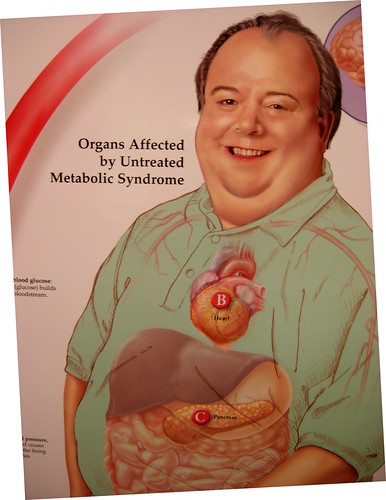
Metabolic syndrome is a name for a group of risk factors that occur together and increase the risk for coronary artery disease, stroke, and type 2 diabetes.

A new study, presented by Katherine McGlynn (NIH) at the AACR 102nd Annual Meeting, linked metabolic syndrome to an increased risk of liver cancer.

Someone with metabolic syndrome has at least three of the following five conditions:

- Raised Blood Pressure,

- Elevated Waist Circumference,

- Low HDL or “Good” Cholesterol,

- Raised Triglyceride Levels and

- Raised Fasting Plasma Glucose Levels.

People with this condition are known to have an increased risk of heart disease, but the current study, which analyzed more than 4,000 people with liver cancer and compared them to nearly 200,000 people without cancer, found that people with metabolic syndrome were even more likely to develop liver cancer.

The study found that 37.1 percent of people with a type of liver cancer called hepatocellular carcinoma had metabolic syndrome, while only 17.1 percent of those without liver cancer had metabolic syndrome. Nearly 30 percent of people with another type of liver cancer called intrahepatic carcinoma had metabolic syndrome.

The above story is reprinted (with editorial adaptations by The Zestzfulness Team) from materials provided by the American Association for Cancer Research.

More information

Learn more about steps you can take to help prevent cancer from the U.S. National Cancer Institute.

Read our other reports on cancer by typing “cancer” in the search box on the right.

Diabetes and Cancer

Add Cancer to Health Risks of Diabetes

Diabetes is already linked to a number of complications, but emerging evidence suggests an increased risk of cancer can be added to that list.

A new study found that women with diabetes had an 8 percent increased risk of developing cancer generally, and there was a similar pattern in men, except for prostate cancer. For reasons that remain unclear, diabetes was actually associated with a lower incidence of prostate cancer in men, the study found.

The risk of dying from a cancer was also higher in people with diabetes -- 11 percent greater for women and 17 percent higher in men.

Gabriel Lai et al used a prospective cohort from the National Institutes of Health-AARP Diet and Health Study that included 295,287 men and 199,665 to evaluate the relationship between diabetes and cancer risk.

After 11 years of follow-up, 55,888 men and 26,364 women had developed cancer.

The risk of liver cancer was increased more than two-fold in people with diabetes, according to the study. The risk of cancer of the rectum was increased by 28 percent in people with diabetes, and the risk of colon cancer was increased by 15 percent.

In men, the risk of pancreatic and bladder cancers was increased in those with diabetes. In women, stomach, anus and uterine cancer risk was greater in those with diabetes.

No association was found between lung, skin and other cancers and diabetes in this study.

It is not clear what the mechanism behind these increased risks might be, but the authors said there are numerous possibilities. It is very important those with diabetes need to be aware that they are at a higher risk of certain cancers, and they have to be screened for cancer.

There are a lot of risk factors that are very similar among the two diseases. Lifestyle modifications, such as eating a healthful diet, exercising and maintaining a healthy body weight, should be adopted to prevent diabetes and cancer.

Reference

Gabriel Lai, Yikyung Park, Patricia Hartge, Albert Hollenbeck, Arthur Schatzkin, Neal Freedman. The association between diabetes and cancer incidence and mortality in the NIH-AARP study. Presented at the AACR 102nd Annual Meeting 2011 on April 3, 2011

More information

Learn more about steps you can take to help prevent cancer from the U.S. National Cancer Institute.

Read our other reports on cancer by typing “cancer” in the search box on the right.

How To Stop The Blame Game


Picture Credit : Tandberg

Blaming only escalates and dramatizes any situation.

Instead, the moment you recognize yourself getting upset, see if you can shift into “neutral.” That doesn’t mean denying your feelings, it means observing them. It doesn’t mean disregarding what someone else is doing, it means seeing it without reacting. It doesn’t mean inaction, it means pausing to discern productive action.

Here are some steps that can help us to access neutral and initiate resolution:

1. Take a break from the situation. Call time-out and step away for a moment. You could say, “I’m feeling a little overwhelmed. Do you mind if I take a break for a few minutes? I’ll be right back.”

2. Walk, stretch, shake out your body, and take several deep breaths.

3. Imagine that you are looking down on the situation from above it. Witness yourself and the others involved from a higher perspective.

4. Re-enter the situation by asking to hear the other person’s point of view. You could say, “Can we start again? Would you begin by telling me your side?”

5. Listen with full attention on what the other person is saying, eye contact, and unconditional positive regard—without countering with your opinion. Repeat back to them what you heard them say to make sure you got it right. For instance, “So, are you saying ________.”

6. State your point of view taking into account what the other person has said.

With the above steps in mind, as you go through the day or take in the news, notice how much “blaming” tends to rule interactions in our world. Each of us can make a difference in that.

by Kevin Schoeninger
L
ife coach, meditation instructor, and trainer with 30 years experience working with clients like you. Kevin brings a wealth of knowledge, genuine compassion, and a sincere intent to support your ideal possibilities and encourage you on your path.