Showing posts with label Cancer Prevention. Show all posts

Monday, September 23, 2013

Orange Juice Helps Fight Cancer


Drinking orange juice every day may help prevent cancer, new research has claimed.

Evidence from previous in vitro studies has indicated that orange juice can reduce the risk of leukaemia in children, as well as aid in chemo-prevention against mammary, hepatic, and colon cancers.

Orange juice has many potential positive effects when it comes to cancer, particularly because it is high in antioxidants from flavonoids such as hesperitin and naringinin, researchers said.

Their review article summarises several biological effects of orange juice that can contribute to chemo-prevention, including antioxidant, antimutagenic and antigenotoxic, cytoprotective, hormonal, and cell signalling modulating effects.

In addition, the antimicrobial and antiviral action of orange juice modulates the absorption of xenobiotics and  could contribute to chemo-prevention at every stage of cancer initiation and progression.

Biological effects of orange juice in vitro are largely influenced by the juice’s composition, which is dependent on physiological conditions of the oranges such as climate, soil, fruit maturation, and storage methods post-harvest.

The amount consumed will also need clarification.

The researchers acknowledge potential toxicity from orange juice if consumed in excess amounts - especially for children, hypertensive, kidney-compromised, and diabetics.

Excessive drinking of orange juice for individuals from these groups has the potential to create noxious effects, hyperkalemia, and has been associated with both food allergies and bacterial outbreaks in cases where the juice was unpasteurised.

"Excessive intake of any food, even for the healthiest, can lead to oxidative status imbalance," researchers said.

Researchers said further research is highly recommended to determine the biological connection between orange juice and cancer chemo-prevention.


###

The above story is based on the September 13, 2013 news release by Taylor & Francis.

The findings are reported in the journal Nutrition and Cancer:
Franke SIR, Guecheva TN, Henriques JAP, Prá D. Orange Juice and Cancer Chemoprevention. Nutr  Cancer, 2013; : 130806112113004

Click HERE to download the complete paper.

###

According to the non-profit organization, Helpguide.org, cancer can be prevented by including more plant-based foods vegetables (broccoli, spinach, corn, peas, tomatoes, sprouts, potatoes) nuts, grains, beans and fruits (apples, grapes,pears, bananas, berries, mango, citrus fruits, apricot) to the diet as they are less in fat, more in fiber and cancer-fighting nutrients.

They also recommend the public to avoid processed foods, add more fiber to the diet and lower fat intake, particularly meat products. Eating fish, replacing vegetable oil with olive oil, restricting fast food, packaged or fried food are some other effective methods that help prevent cancer.

Apart from these, flaxseed, soy, ginger, garlic, sweet potato, green tea, turmeric, basil, rosemary, raisins, prunes and raisins are some of the other cancer-fighting foods.

Saturday, May 25, 2013

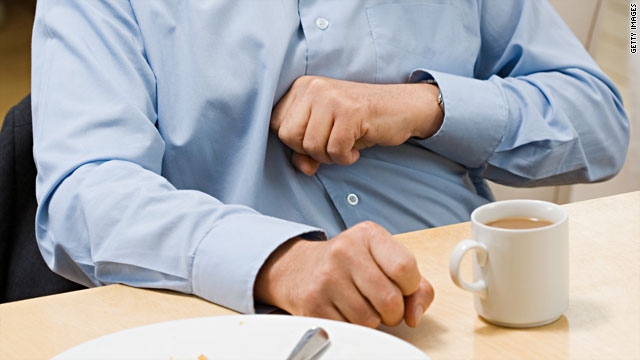
Chronic Heartburn May Raise Odds for Throat Cancer

Credit: i.cdn.turner.com

78 percent increase in the risk for cancer in people who experience heavy heartburn

People who suffer from frequent gastric reflux may be at increased risk for cancers of the throat and vocal cords even if they don't smoke or drink alcohol, a new study says.

Stomach acid can reach into the upper airway, inducing cellular damage in the epithelial lining. This condition is believed to be a risk factor for development of laryngopharyngeal squamous cell carcinoma (LPSCC).

But simple antacids appear to lower the risk

Interestingly, common over-the-counter antacids seemed to protect against these cancers while prescription medications such as Prilosec, Nexium and Prevacid didn't, the researchers said.

The researchers led by Scott Langevin of the Brown University in Providence found that the protective effect of antacids was independent of smoking, drinking or infection with HPV*.

While it uncovered an association between heartburn and cancer of the throat and vocal cords, the study did not prove a cause-and-effect relationship.

Further studies are needed to clarify this possible chemopreventive role of antacid.


###

The report was published online May 23, 2013 in the journal Cancer Epidemiology, Biomarkers & Prevention:

Langevin SM et al. Gastric Reflux Is an Independent Risk Factor for Laryngopharyngeal Carcinoma. Cancer Epidemiol Biomarkers Prev; 22(6); 1–8.

* Since some head and neck cancers are caused by the human papillomavirus (HPV), the researchers tested all the participants for antigens to the virus.

###

For more information on throat cancer by the American Cancer Society.

The University of Maryland Medical Center offers tips for the prevention of heartburn

Friday, January 11, 2013

High Fiber Diet Prevents Prostate Cancer Progression

Credit: www.prostate.net

A high-fiber diet may have the clinical potential to control the progression of prostate cancer in patients diagnosed in early stages of the disease.

The rate of prostate cancer occurrence in Asian cultures is similar to the rate in Western cultures, but in the West, prostate cancer tends to progress, whereas in Asian cultures it does not.

Why? A recent University of Colorado Cancer Center study shows that the answer may be a high-fiber diet.

The study compared mice fed with of inositol hexaphosphate (IP6), a major component of high-fiber diets, to control mice that were not. Then the study used MRI to monitor the progression of prostate cancer in these models.

"The study's results were really rather profound. We saw dramatically reduced tumor volumes, primarily due to the anti-angiogenic effects of IP6," says Komal Raina, PhD, research instructor at the Skaggs School of Pharmacy and Pharmaceutical Sciences, working in the lab of CU Cancer Center investigator and School of Pharmacy faculty member, Rajesh Agarwal, PhD.

Basically, feeding with the active ingredient of a high-fiber diet kept prostate tumors from making the new blood vessels they needed to supply themselves with energy. Without this energy, prostate cancer couldn't grow. Likewise, treatment with IP6 slowed the rate at which prostate cancers metabolized glucose.

Possible mechanisms for the effect of IP6 against metabolism include a reduction in a protein called GLUT-4, which is instrumental in transporting glucose.

"Researchers have long been looking for genetic variations between Asian and Western peoples that could explain the difference in prostate cancer progression rates, but now it seems as if the difference may not be genetic but dietary. Asian cultures get IP6 whereas Western cultures generally do not," Raina says.


###

The above story is based on the January 9, 2013 news release by University of Colorado Denver.

December 4, 2012 the journal Cancer Prevention Research:
Raina K, Ravichandran K, Rajamanickam S, Huber KM, Serkova NJ, Agarwal R. Inositol Hexaphosphate Inhibits Tumor Growth, Vascularity, and Metabolism in TRAMP Mice: A Multiparametric Magnetic Resonance Study. Cancer Prev Res (Phila).  2012; 6 (1): 40 DOI: 10.1158/1940-6207.CAPR-12-0387

Monday, October 29, 2012

Pengambilan Harian Multivitamin Mengurangkan Risiko Kanser pada Lelaki

Pengambilan harian multivitamin boleh mengurangkan risiko kanser di kalangan lelaki, menurut keputusan ujian secara rawak terbesar di Amerika Syarikat
Beberapa ujian vitamin berasingan, diberi pada dos yang tinggi, tidak menunjukkan apa-apa kesan terhadap pencegahan kanser. Kajian secara pengamatan juga tidak menyediakan bukti hubungan antara penggunaan multivitamin dan pengurangan insiden kanser atau kematian.

Walau bagaimanapun, kajian semasa adalah unik dalam beberapa cara, yang pertama bahawa ia adalah satu-satunya ujian plasebo terkawal berskala besar yang menilai multivitamin dalam pencegahan kanser.

Ia juga merupakan satu tempoh yang panjang dan doktor sendiri terlibat sebagai subjek.
Selepas kira-kira 11 tahun, penggunaan multivitamin mengakibatkan pengurangan yang sederhana tetapi signifikan secara statistik – secara khusus, pengurangan sebanyak 8% dalam keseluruhan kejadian kanser.
Kajian ini melibatkan 14,641 doktor lelaki AS berumur ≥ 50 tahun (min umur, 64.3 tahun), termasuk 1,312 lelaki dengan sejarah kanser secara random, mendaftar pada tahun 1997 dengan rawatan dan susulan hingga 1 Jun, 2011. Mereka menerima sama ada multivitamin jenama yang sama (Centrum Silver) atau plasebo. Hasil utama adalah pengiraan jumlah kanser (tidak termasuk kanser kulit non-melanoma), dengan prostat, kolorektal, dan lain-lain kanser khusus di peringkat akhir kedua.


Semasa susulan pertengahan dari 11.2 tahun:

• Terdapat 2,669 lelaki dengan kanser disahkan, termasuk 1,373 kes kanser prostat dan 210 kes kanser kolorektal.

• Berbanding dengan plasebo, lelaki yang mengambil multivitamin setiap hari mempunyai pengurangan ketara secara statistik dalam jumlah terjadinya kanser (multivitamin dan kumpulan plasebo, 17.0 dan 18.3 kejadian, masing-masing, setiap 1000 orang-setahun; nisbah bahaya [HR], 0.92, 95% CI, 0,86-0,998; p = 0.04).

• Tiada kesan ketara pada pengambilan harian multivitamin pada kanser prostat (multivitamin dan kumpulan plasebo, 9.1 dan 9.2 acara masing-masing, setiap 1000 orang-setahun; 0,98; 0,88-1,09; p = 0.76), kanser kolorektal (multivitamin dan kumpulan plasebo , 1.2 dan 1.4 kejadian, masing-masing, setiap 1000 orang-setahun; 0,89; 0,68-1,17; p = 0.39), atau kanser khusus yang lain.

• Tiada perbezaan yang ketara dalam risiko kematian kanser (multivitamin dan kumpulan plasebo, 4.9 dan 5.6 masing-masing, setiap 1000 orang-setahun ; 0,88; 0,77-1,01; p = 0.07).

penggunaan multivitamin harian telah dikaitkan dengan pengurangan jumlah dalam kanser di kalangan 1,312 lelaki dengan sejarah awal kanser (0.73; ,56-0,96; p = 0.02), tetapi tidak berbeza secara ketara di kalangan 13,329 lelaki yang pada mulanya tanpa kanser (0,94; 0,87-1,02; p = 0.15; p bagi interaksi = 0.07).Pengurangan dalam Jumlah Kanser
"Mesej utama kami mengambil multivitamin adalah disebabkan kekurangan nutrisi tetapi ia pastinya kelihatan bahawa mungkin ada manfaat sederhana dalam mencegah kanser di kalangan lelaki berusia lebih 50 tahun," kata pengarang John Michael Gaziano.

# # #

Kajian ini juga telah diterbitkan secara dalam talian pada 17hb Oktober 2012, di
Journal of the American Medical Association Published:
Gaziano JM, Sesso HD, Christen WG, Bubes V, Smith JP, MacFadyen J, Schvartz M, Manson JE, Glynn RJ, Buring JE. Multivitamins in the Prevention of Cancer in MenThe Physicians' Health Study II Randomized Controlled Trial . JAMA. 2012;():1-10. doi:10.1001/jama.2012.14641.

Anda boleh membaca teks penuh DI SINI


Artikel ini diterjemahkan dari bahasa Inggeris oleh Ahli Farmasi Mahfuza Turman

Saturday, October 20, 2012

Daily Multivitamins Cut Cancer Risk in Men

Centrum Silver and other MVTs


The daily use of multivitamins may reduce the risk for cancer in men, according to the results of a very large randomized trial in the US

A number of trials of individual vitamins, administered at high doses, have not shown any effect at preventing cancer. Observational studies have also not provided evidence of an association between multivitamin use and a reduction in cancer incidence or mortality.

However, the current study is unique in a number of ways, the first being that it is the only large-scale placebo-controlled trial evaluating a multivitamin in the prevention of cancer.

It is also of long duration and involved physicians themselves as the subject.

After about 11 years, multivitamin use resulted in a modest but statistically significant reduction — specifically, an 8% reduction in total cancer incidence.

The study involved 14,641 male US physicians initially aged ≥50 years (mean age, 64.3 years), including 1312 men with a history of cancer at randomisation, enrolled in 1997 with treatment and follow-up through to June 1, 2011. They received either daily exact same brand multivitamin (Centrum Silver) or placebo. The main outcome measures were total cancer (excluding non-melanoma skin cancer), with prostate, colorectal, and other site-specific cancers among the secondary end points.

During a median follow-up of 11.2 years:

• There were 2669 men with confirmed cancer, including 1373 cases of prostate cancer and 210 cases of colorectal cancer.

• Compared with placebo, men taking a daily multivitamin had a statistically significant reduction in the incidence of total cancer (multivitamin and placebo groups, 17.0 and 18.3 events, respectively, per 1000 person-years; hazard ratio [HR], 0.92; 95% CI, 0.86 to 0.998; p=0.04).

• There was no significant effect of a daily multivitamin on prostate cancer (multivitamin and placebo groups, 9.1 and 9.2 events, respectively, per 1000 person-years; 0.98; 0.88 to 1.09; p=0.76), colorectal cancer (multivitamin and placebo groups, 1.2 and 1.4 events, respectively, per 1000 person-years; 0.89; 0.68 to 1.17; p=0.39), or other site-specific cancers.

• There was no significant difference in the risk of cancer mortality (multivitamin and placebo groups, 4.9 and 5.6 events, respectively, per 1000 person-years; 0.88;, 0.77 to 1.01; p=0.07).

• Daily multivitamin use was associated with a reduction in total cancer among 1312 men with a baseline history of cancer (0.73; 0.56 to 0.96; p=0.02), but this did not differ significantly from that among 13,329 men initially without cancer (0.94; 0.87 to 1.02; p=0.15; p for interaction=0.07).

Reduction in Total Cancers

"Our main message is that the main reason to take a multivitamin is for nutritional deficiencies but it certainly appears that there may be a modest benefit in preventing cancer in men over the age of 50," lead author John Michael Gaziano said.


###

The study has also been published online October 17, 2012 in the Journal of the American Medical Association Published:

Gaziano JM, Sesso HD, Christen WG, Bubes V, Smith JP, MacFadyen J, Schvartz M, Manson JE, Glynn RJ, Buring JE. Multivitamins in the Prevention of Cancer in MenThe Physicians' Health Study II Randomized Controlled Trial . JAMA. 2012;():1-10. doi:10.1001/jama.2012.14641.

You can read the full text HERE

Saturday, October 13, 2012

Exercise Could Fortify Immune System Against Future Cancers


Credit: www.bellenews.com


Another item to the list of exercise's well-documented health benefits

Exercise can reduce the risk of getting initial incidence of several different types of cancers, can often improve prognosis in cancer patients, and can reduce the risk of recurrence and secondary cancers survivors of some types of cancers. However, the mechanism behind these phenomena has been unknown.

A preliminary study suggests that when cancer survivors exercise for several weeks after they finish chemotherapy, their immune systems remodel themselves to become more effective, potentially fending off future incidents of cancer.

Laura Bilek, Graham Sharp, and Geoffrey Thiele, all of the University of Nebraska Medical Center, and Daniel Shackelford, Colin Quinn, and Carole Schneider, all of Rocky Mountain Cancer Rehabilitation Institute, analyzed T cells* in the blood of cancer survivors before and after a 12-week exercise program. They found that a significant portion of these immune cells converted from a senescent form, which isn't as effective at combating disease, to a naïve form, ready to fight cancer and infections.

Exercise and Immunity

Working with a group of 16 cancer survivors, all but one of who recently finished chemotherapy cancer treatment, the researchers focused on T cells, a type of immune cell that attacks a variety of infectious agents as well as cancer cells. After chemotherapy, previous research had shown that the majority of T cells become senescent, with a decreased ability to fight infections and cancers. However, Bilek says, rebuilding the population of responsive (naïve) T cells is critical for regaining normal immune function and cancer-fighting ability.

The researchers first took blood samples from each of the volunteers to examine how many senescent and naïve T cells each had. Then, these study subjects were all enrolled into 12-week exercise programs at the Rocky Mountain Cancer Rehabilitation Institute. All programs were individualized for the study participants, incorporating elements of cardiovascular exercise, strength and endurance training, and exercises for flexibility, posture, and balance, with extra emphasis in areas where participants were weak.

After the 12-week program, the researchers drew a second blood sample from each volunteer and ran the same T cell analysis.

Another Reason to Work Out

Results showed that the ratio of senescent to naïve T cells changed favorably in the majority of participants, with most of the study subjects regaining greater numbers of the naïve variety.

"What we're suggesting is that with exercise, you might be getting rid of T cells that aren't helpful and making room for T cells that might be helpful," Bilek says.

She adds that this finding highlights the importance of exercise for all, including those with cancer and cancer survivors. These two populations might benefit especially from the heightened "cancer surveillance" -- the ability of the immune system to seek out and destroy budding cancers -- that this study suggests exercise brings, Bilek explains.

"There's a litany of positive benefits from exercise," Bilek says. "If exercise indeed strengthens the immune system and potentially improves cancer surveillance, it's one more thing we should educate patients about as a reason they should schedule regular activity throughout their day and make it a priority in their lives."


###

The above story is based on the October, 10, 2012 news release by American Physiological Society.

The poster presentation entitled, "Effect of Exercise on T Cells in Cancer Survivors," will be presented at The Integrative Biology of Exercise VI meeting being held October 10-13 at the Westin Westminster Hotel in Westminster, CO.
What are T cells?
T cells are a type of white blood cells called lymphocytes. They make up part of the immune system. T cells help the body fight diseases or harmful substances.

T cells and Diabetes : http://www.tcells.org/scientific/downloads/Diabetes.pdf