Showing posts with label Healthy Lifestyle. Show all posts

Thursday, October 3, 2013

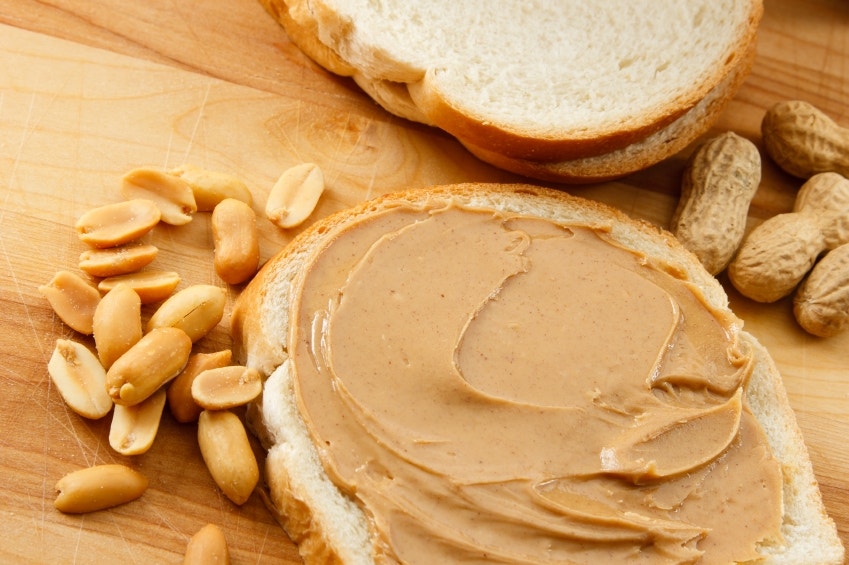
Peanut Butter and Breast Health

Credit: http://global.fncstatic.com


Here’s some news worth spreading:

Girls who eat more peanut butter could improve their breast health later in life.

That’s according to a study from Washington University School of Medicine in St. Louis and Harvard Medical School. The research shows that girls ages 9 to 15 who regularly ate peanut butter or nuts were 39 percent less likely to develop benign breast disease by age 30.

Benign breast disease is fairly common, and a known risk factor for breast cancer. Depending on the characteristics of its lesion, benign breast disease could increase breast cancer risk by threefold.

The findings are based on the health histories of 9,039 U.S. girls enrolled in The Growing Up Today Study from 1996 through 2001. Later, from 2005 through 2010, when the study participants were 18 to 30 years old, they reported whether they had been diagnosed with benign breast disease that had been confirmed by breast biopsy.

The study’s findings suggest that beans, lentils, soybeans and corn also may help prevent benign breast disease, but consumption of these foods was much lower in these girls and thus the evidence was weaker.

The take-home message is for teens and preteens to substitute peanuts and peanut butter for less-healthy snacks such as cookies, unless you are allergic to peanuts.


###

The above story is based on the September 25, 2013 news release by the Washington University in St. Louis.

The research was published in the journal Breast Cancer Research and Treatment:

Berkey CS, Willett WC,Tamimi RM, Rosner B, Frazier AL, Colditz GA. Vegetable protein and vegetable fat intakes in pre-adolescent and adolescent girls, and risk for benign breast disease in young women. Breast Cancer Res Treat. 2013 Sep:141(2): 299-306

###

More information

Click HERE for more about benign breast conditions from the American Cancer Society.

Peanut allergy is a hypersensitivity reaction to dietary substances from peanuts that causes an overreaction of the immune system which in a small percentage of people may lead to severe physical symptoms. Click HERE for more on peanut allergy.

About 0.6% of American adults and 1.4% percent of children are allergic to peanuts. Interestingly, the prevalence of peanut allergy in China is much lower, despite a high rate of peanut consumption in China. 

It appears that the method of preparing peanuts could be a factor in the disparity of allergy prevalence between the 2 countries.

The methods of frying or boiling peanuts, as practiced in China, appear to reduce the allergenicity of peanuts compared with the method of dry roasting practiced widely in the United States. Roasting uses higher temperatures that apparently increase the allergenic property of peanut proteins.

Beyer K, Morrow E, Li XM, Bardina L, Bannon GA, Burks AW, Sampson HA. Effects of cooking methods on peanut allergenicity.  J Allergy Clin Immunol. 2001 Jun;107(6):1077-81.

If you are not allergic to peanuts, go to The Peanut Institute and learn more about peanuts and health.

If you want to follow this blog by email free of charge, please submit your email address below or on the top right hand side of this page.

Tuesday, October 1, 2013

Positive Attitude Linked to Longer Life in Heart Patients


Heart disease patients with positive attitudes are more likely to exercise and live longer, according to a recent study.

Researchers used a questionnaire to assess the moods of 600 ischemic heart disease patients in a Denmark hospital. Five years later, researchers found:

  • The most positive patients exercised more and had a 42 percent less chance of dying for any reason during the follow-up period; deaths were less than 10 percent.
  • Among patients with less positive attitudes, 50 deaths occurred (16.5 percent).
  • Positive mood and exercise also cut the risk of heart-related hospitalizations.

Ischemic heart disease, also called coronary artery disease, is caused by narrowed arteries that don't provide enough blood and oxygen to the heart.

Exercise levels the playing field between positive and negative patients, researchers said. So the differences in death rates between upbeat and sad heart patients weren't as striking when both groups exercised. However, information on the types and amounts of exercise were not available.

Other studies have shown that heart patients' optimistic mood improves their health.

"We should focus not only on increasing positive attitude in cardiac rehabilitation, but also make sure that patients perform exercise on a regular basis, as exercise is associated with both increased levels of optimism and better health," said Susanne S. Pedersen, Ph.D., one of the study authors and professor of cardiac psychology, the Department of Medical and Clinical Psychology, Tilburg University, the Netherlands, and adjunct professor of cardiac psychology, the University of Southern Denmark and Odense University Hospital, Denmark.

Mood and exercise have a chicken-and-egg, two-way relationship with each factor influencing the other, she said.

The study's results on patients, predominantly white and 75 percent male, likely apply to a wider range of cardiac patients, including those in the United States, Pedersen said.

###

The above story is based on the Sept. 10, 2013 news release by American Heart Association.

The research has been published in the American Heart Association journal Circulation: Cardiovascular Quality and Outcomes:

Hoogwegt MT, Versteeg H, Hansen TB, Thygesen LC, Pedersen SS, Zwisler A. Exercise Mediates the Association Between Positive Affect and 5-Year Mortality in Patients With Ischemic Heart Disease. Circ Cardiovasc Qual Outcomes, September 2013 DOI: 10.1161/CIRCOUTCOMES.113.000158

###

Mindfulness meditation can help you maintain a calm and positive attitude and keep you grounded and relaxed!


You may wish to follow this Youtube naration by Bliss Johns, author of the widely successful self-help book, "Recovery & Renewal" and founder of the Recovery Road charity.

Click HERE if the video does not appear on your screen


If you want to follow this blog by email free of charge, please submit your email address below or on the top right hand side of this page.