Showing posts with label Self-Care. Show all posts

Saturday, March 24, 2012

Two-Arm Blood Pressure Check Could Save Lives

Serious Risks of Vascular Disease With Two-Arm Blood Pressure Difference


In January a research team from the Peninsula College of Medicine and Dentistry suggested that a difference of more than 10mmHg or 15mmHg in systolic blood pressure (the 'top' reading) was an indicator of increased risk of vascular disease and mortality.


This finding is supported by a second study that further emphasised the need for two-arm blood pressure checks to become the norm.


Of the 230 patients studied, 24 percent had a difference between the arms in systolic blood pressure measurements of more than 10mmHg and nine per cent registered a difference of more than 15mmHg.


From the authors' previous review, a difference of 10mmHg indicates an increased risk of peripheral vascular disease (the narrowing and hardening of the arteries that supply blood to the legs and feet).


A difference of 15mmHg or more is associated with increased risk of peripheral vascular disease; pre-existing cerebrovascular disease (affecting the blood supply to the brain and often associated with conditions such as dementia); and mortality, both as a result of cardiovascular problems and generally.


By carrying out a study over 10 years, the research team was able to assess the impact of an inter-arm difference in blood pressure over a longer period of time and so witness the long-term effect on patients' health.


During the study period 52 cardiovascular and 27 cerebrovascular events occurred in 76 patients. Fifty-nine patients died and a total of 100, 44 per cent of the total participating number, either suffered a cardiovascular or cerebrovascular event, or died.


Dr. Christopher Clark, lead author of both studies, commented: "Our 10-year follow-up on hypertensive patients has for the first time shown in a primary care setting that, over time, an interarm difference in systolic blood pressure of 10 mm Hg or more or 15 mm Hg or more predicts reduced mortality and event free survival. The risk of a first vascular event, in the presence of an interarm difference, appears to be as great as that found in patients with pre-existing cardiovascular disease."


He added: "This study supports the potential value of an interarm difference as a simple clinical indicator of increased cardiovascular risk. Assessment of blood pressure in both arms is recommended by guidelines and should become a core component of initial blood pressure measurement in primary care. Detection of an inter-arm difference should prompt consideration of further vascular assessment and aggressive management of risk factors."


Professor John Campbell, Professor of General Practice and Primary Care at Peninsula College of Medicine and Dentistry said: "This study highlights the vital importance of carefully conducted clinical research derived from community based settings. Nearly one-million consultations take place each day in GP surgeries and practices. UK general practitioners are in a unique position to identify and follow-up cohorts of their patients over extended periods of time using their personal knowledge of patients and their families, and drawing on the availability of high quality clinical records in UK primary care settings. This is a prime example of the benefit of providing continuous care for patients over a period of time acting as the basis for important clinical research, and highlights the importance of addressing clinically relevant questions generated by health professionals delivering care at the coal-face. We hope the results will be used to develop further research examining exactly how the findings can best be used to inform evidence-based care for NHS patients in the UK."


The above story is based on the March 19, 2012 news release by The Peninsula College of Medicine and Dentistry.


The research was published online by British Medical Journal: Clark CE, Taylor RS, Campbell JL. The difference in blood pressure readings between arms and survival: primary care cohort study. BMJ, 2012; 344 DOI: 10.1136/bmj.e1327


Saturday, October 15, 2011

Vitamin E Supplement May Increase Prostate Cancer Risk

Updated Trial Data Show 17 Percent Increase in Cancer Risk

Men who take a daily vitamin E supplement – a regimen once thought to reduce cancer risk – face an increased risk of prostate cancer, according to results of a large national study.

The finding comes from a report summarizing the latest results of the Selenium and Vitamin E Cancer Prevention Trial (SELECT). Eric Klein, MD, chair of the Glickman Urological and Kidney Institute at Cleveland Clinic, is the lead author.

SELECT began in 2001 to test earlier research suggesting selenium and vitamin E supplements may reduce the risk of developing certain cancers. Some vitamin supplements containing enhanced levels of selenium and vitamin E were marketed to consumers during this time period with claims of reducing cancer risk.

400 IU of Vitamin E a day

The paper, which will appear in the October 12 edition of the Journal of the American Medical Association, found that a group of men taking a daily dose of 400 IU of vitamin E from 2001 to 2008 had 17 percent more cases of prostate cancer than men who took a placebo.

“For the typical man, there appears to be no benefit in taking vitamin E, and in fact, there may be some harm,” said Dr. Klein, an internationally renowned prostate cancer expert who served as the national study coordinator.

SELECT tracked more than 35,000 men at locations across the United States, Canada, and Puerto Rico who took daily doses through the Fall of 2008. The trial was funded by the National Cancer Institute and administered by the Southwest Oncology Group (SWOG), an international network of research institutions with study sites in 400 locations across the U.S., Puerto Rico and Canada.

The men were divided into four groups: vitamin E and Selenium; vitamin E alone; selenium alone; and placebo. The group taking vitamin E was the only group shown to have a statistically significant increased risk of prostate cancer.

Prostate cancer is the most common non-skin cancer in American men with a current lifetime risk of 16 percent. For 2011 it is estimated 240,000 new cases and 33,000 deaths will result in the U.S.

Men who participated in the SELECT trail can find more information at www.SWOG.org.

Story Source:

The above story is reprinted (with editorial adaptations by The Zestzfulness Team) from materials provided by the Cleveland Clinic News Service of October 11, 2011

Journal Reference:

E. A. Klein, I. M. Thompson, C. M. Tangen, J. J. Crowley, M. S. Lucia, P. J. Goodman, L. Minasian, L. G. Ford, H. L. Parnes, J. M. Gaziano, D. D. Karp, M. M. Lieber, P. J. Walther, L. Klotz, J. K. Parsons, J. L. Chin, A. Darke, S. M. Lippman, G. E. Goodman, F. L. Meyskens, L. H. Baker. Vitamin E and the Risk of Prostate Cancer: Results of The Selenium and Vitamin E Cancer Prevention Trial (SELECT). JAMA, 2011; 306 (14): 1549-1556 DOI: 10.1001/jama.2011.1437


The Zestzfulness Team says:

Remember how you whinged about there being only 30units of Vitamin E in Surbex Zinc?

Vitamin E works synergistically together with Vitamin C enhancing each other so that only minimal amount is used for maximum benefit with no potential to do harm.

You are overstocked with Natopherol 400iu Vegecap and you worry about your prostate?

Two things you can do – hand over the goody to your old lady or space out your dose to once a week!

Find out what fats, broccoli and tomatoes have to do with your prostate by typing PROSTATE in the search box on the next column.

Wednesday, September 7, 2011

Making Multiple Lifestyle Improvements Can Significantly Reduce Diabetes Risk

It is well-documented that lifestyle factors such as diet, weight, physical activity, smoking habits, and alcohol consumption affect a person's risk for diabetes.

Studies have shown that individual lifestyle improvements, such as quitting smoking, can delay or prevent the onset of diabetes. However, it is less clear how multiple changes affect diabetes risk.

Researchers surveyed more than 100,000 men and nearly 1000,000 women aged 50 to 71 without evidence of heart disease, cancer, or diabetes to determine how combinations of lifestyle risk factors relate to the 11-year risk for diabetes. Between 1995 and 1996, researchers surveyed participants and recorded demographic information and lifestyle factors, including dietary habits, body weight, physical activity, smoking, and alcohol consumption.

Ten years later, researchers surveyed participants again to find out who was diagnosed with diabetes by a physician. Ten percent of men and almost as many women developed diabetes during the study. The researchers used original survey information to measure the association between lifestyle factors and onset of diabetes.

Persons with the best lifestyle factors were about 80 percent less likely to develop diabetes than those with the worst lifestyle factors, and the risk for diabetes decreased for each additional good lifestyle factor.

The report is published in the Annals of Internal Medicine: Reis JP, Loria M, Sorlie PD, Park Y, Hollenbeck A, Schatzkin A. Lifestyle Factors and Risk for New-Onset Diabetes: A Population-Based Cohort Study. Ann Intern Med September 6, 2011 155:292-299.

Story Source: The above story is reprinted (with editorial adaptations by The Zestzfulness Team) from the news release by the American College of Physicians on September 5, 2011.

Wednesday, August 31, 2011

Omega-3 Reduce Stroke Severity

A diet rich in omega-3s reduces the severity of brain damage after a stroke, according to a study conducted by Université Laval researchers. The team, co-directed by professors Jasna Kriz and Frédéric Calon, showed that the extent of brain damage following a stroke was reduced by 25% in mice that consumed DHA type omega-3s daily. Details of the study can be found on the website of the journal Stroke.

Researchers observed that the effects of stroke were less severe in mice that had been fed a diet rich in DHA for three months than in mice fed a control diet. In mice from the DHA group, they saw a reduction in the concentrations of molecules that stimulate tissue inflammation and, conversely, a larger quantity of molecules that prevent the activation of cell death.

“This is the first convincing demonstration of the powerful anti-inflammatory effect of DHA in the brain,” underscored Frédéric Calon of Université Laval’s Faculty of Pharmacy. This protective effect results from the substitution of molecules in the neuronal membrane: DHA partially replaces arachidonic acid, an omega-6 fatty acid known for its inflammatory properties.

“The consumption of omega-3s creates an anti-inflammatory and neuroprotective environment in the brain that mitigates damage following a stroke,” summarized Jasna Kriz, of Université Laval’s Faculty of Medicine. “It prevents an acute inflammatory response that, if not controlled, is harmful to brain tissue.”

Professor Calon believes that this anti-inflammatory effect is likely transferable to humans. “Since DHA is readily available, inexpensive, and reduces the risk of a number of health problems without causing significant side effects, the risk–benefit ratio tends to favor the regular consumption of fish or DHA,” he concluded.

In addition to Kriz and Calon, the study was co-authored by Mélanie Lalancette-Hébert, Pierre Cordeau, Carl Julien, Ivan Bohacek, and Yuan-Cheng Weng. The authors are all members of the CHUQ Research Center.


Story Source:

The above story is reprinted (with editorial adaptations by The Zestzfulness Team) from the news release by Université Laval on August 25, 2011.


Journal Reference:

M. Lalancette-Hebert, C. Julien, P. Cordeau, I. Bohacek, Y.-C. Weng, F. Calon, J. Kriz. Accumulation of Dietary Docosahexaenoic Acid in the Brain Attenuates Acute Immune Response and Development of Postischemic Neuronal Damage. Stroke, published online before print, August 18, 2011


See related Zestzfulness reports below:

Zestzfulness: DHA and Stroke

Dr. Bazan says "We are just now beginning to understand the significant impact of omega-3 essential fatty acids on stroke. There is no simple solution just yet, but each new discovery brings us closer to defeating stroke

Zestzfulness: Eating More Fried Fish May Contribute to Stroke

Omega-3 fatty acids from fish have been shown to have favorable effects on platelet aggregation, blood pressure, lipid profile, endothelial function, and ischemic stroke risk. The amount of fish consumed, and preferences ...

Wine Boosts Omega-3 Independently of Fish Intake

We know that moderate alcohol consumption, including wine, is associated with protection against coronary heart disease and ischemic stroke. A European study IMMIDIET published in the January 2009 issue of the American Journal of Clinical Nutrition1 found moderate alcohol intake increases the amount of omega-3 fatty acids in plasma and red blood cells independently of the amount of fish consumed . The study further suggests that wine does better than other alcoholic ...

Saturday, August 27, 2011

Fish Oil’s Impact on Cognition and Brain Structure


Researchers at Rhode Island Hospital’s Alzheimer’s Disease and Memory Disorders Center have found positive associations between fish oil supplements and cognitive functioning as well as differences in brain structure between users and non-users of fish oil supplements. The findings suggest possible benefits of fish oil supplements on brain health and aging. The results were reported at the recent International Conference on Alzheimer’s Disease, in Paris, France.

The study was led by Lori Daiello, PharmD, a research scientist at the Rhode Island Hospital Alzheimer’s Disease and Memory Disorders Center. Data for the analyses was obtained from the Alzheimer’s Disease Neuroimaging Initiative (ADNI), a large multi-center, NIH-funded study that followed older adults with normal cognition, mild cognitive impairment, and Alzheimer’s Disease for over three years with periodic memory testing and brain MRIs.

The study included 819 individuals, 117 of whom reported regular use of fish oil supplements before entry and during study follow-up. The researchers compared cognitive functioning and brain atrophy for patients who reported routinely using these supplements to those who were not using fish oil supplements.

Daiello reports that compared to non-users, use of fish oil supplements was associated with better cognitive functioning during the study. However, this association was significant only in those individuals who had a normal baseline cognitive function and in individuals who tested negative for a genetic risk factor for Alzheimer’s Disease known as APOE4. This is consistent with previous research.

The unique finding, however, is that there was a clear association between fish oil supplements and brain volume. Consistent with the cognitive outcomes, these observations were significant only for those who were APOE4 negative.

Daiello says, “In the imaging analyses for the entire study population, we found a significant positive association between fish oil supplement use and average brain volumes in two critical areas utilized in memory and thinking (cerebral cortex and hippocampus), as well as smaller brain ventricular volumes compared to non-users at any given time in the study. In other words, fish oil use was associated with less brain shrinkage in patients taking these supplements during the ADNI study compared to those who didn’t report using them.”

Daiello continues, “These observations should motivate further study of the possible effects of long-term fish oil supplementation on important markers of cognitive decline and the potential influence of genetics on these outcomes.”

The research team included Brian Ott, director of the Rhode Island Hospital and Memory Disorders Center, Assawin Gongvatana, Shira Dunsiger and Ronald Cohen from The Miriam Hospital and the Brown University Department of Psychiatry and Human Behavior (Gonvatana and Cohen), and Department of Behavior and Social Sciences (Dunsiger).

Daiello is a research scientist at Rhode Island Hospital, a member hospital of the Lifespan health system in Rhode Island and an assistant professor of neurology (research) at The Warren Alpert Medical School of Brown University. Direct financial and infrastructure support for this project was received through the Lifespan Office of Research Administration. The study was supported by career development grants from the Agency for Health Care Research and Quality (Daiello) and the National Institute on Alcohol Abuse and Alcoholism (Gongvatana).

The above story is reprinted (with editorial adaptations by The Zestzfulness Team) from materials posted on Rhode Island Hospital Online Newsroom on August 17, 2011.


Saturday, August 20, 2011

Omega-3 Reduces Anxiety and Inflammation in Healthy Students


Picture credit : http://www.independent.co.uk


A new study gauging the impact of consuming more fish oil showed a marked reduction both in inflammation and, surprisingly, in anxiety among a cohort of healthy young people.

The findings suggest that if young participants can get such improvements from specific dietary supplements, then the elderly and people at high risk for certain diseases might benefit even more.

The findings by a team of researchers at Ohio State University were just published in the journal Brain, Behavior and Immunity. It is the latest from more than three decades of research into links between psychological stress and immunity.

Omega-3 polyunsaturated fatty acids, such as eicosapentaenoic acid (EPA) and docosahexaenoic acid (DHA), have long been considered as positive additives to the diet. Earlier research suggested that the compounds might play a role in reducing the level of cytokines in the body, compounds that promote inflammation, and perhaps even reduce depression.

Psychological stress has repeatedly been shown to increase cytokine production so the researchers wondered if increasing omega-3 might mitigate that process, reducing inflammation.

To test their theory, they turned to a familiar group of research subjects – medical students. Some of the earliest work these scientists did showed that stress from important medical school tests lowered students' immune status.

"We hypothesized that giving some students omega-3 supplements would decrease their production of proinflammatory cytokines, compared to other students who only received a placebo," explained Janice Kiecolt-Glaser, professor of psychology and psychiatry.

"We thought the omega-3 would reduce the stress-induced increase in cytokines that normally arose from nervousness over the tests."

The team assembled a field of 68 first- and second-year medical students who volunteered for the clinical trial. The students were randomly divided into six groups, all of which were interviewed six times during the study. At each visit, blood samples were drawn from the students who also completed a battery of psychological surveys intended to gauge their levels of stress, anxiety or depression. The students also completed questionnaires about their diets during the previous weeks.

Half the students received omega-3 supplements while the other half were given placebo pills.

"The supplement was probably about four or five times the amount of fish oil you'd get from a daily serving of salmon, for example," explained Martha Belury, professor of human nutrition and co-author in the study.

Part of the study, however, didn't go according to plans.

Changes in the medical curriculum and the distribution of major tests throughout the year, rather than during a tense three-day period as was done in the past, removed much of the stress that medical students had shown in past studies.

"These students were not anxious. They weren't really stressed. They were actually sleeping well throughout this period, so we didn't get the stress effect we had expected," Kiecolt-Glaser said.

But the psychological surveys clearly showed an important change in anxiety among the students: Those receiving the omega-3 showed a 20 percent reduction in anxiety compared to the placebo group.

An analysis of the of the blood samples from the medical students showed similar important results.

"We took measurements of the cytokines in the blood serum, as well as measured the productivity of cells that produced two important cytokines, interleukin-6 (IL-6) and tumor necrosis factor alpha (TNFa)," said Ron Glaser, professor of molecular virology, immunology & medical genetics and director of the Institute for Behavioral Medicine Research.

"We saw a 14 percent reduction in the amounts of IL-6 among the students receiving the omega-3." Since the cytokines foster inflammation, "anything we can do to reduce cytokines is a big plus in dealing with the overall health of people at risk for many diseases," he said.

While inflammation is a natural immune response that helps the body heal, it also can play a harmful role in a host of diseases ranging from arthritis to heart disease to cancer.

While the study showed the positive impact omega-3 supplements can play in reducing both anxiety and inflammation, the researchers aren't willing to recommend that the public start adding them to the daily diet.

"It may be too early to recommend a broad use of omega-3 supplements throughout the public, especially considering the cost and the limited supplies of fish needed to supply the oil," Belury said. "People should just consider increasing their omega-3 through their diet."

Some of the researchers, however, acknowledged that they take omega-3 supplements.

Source :

Ohio State University news release, 13-Jul-2011


Ya, Anda Boleh Mencegah Alzheimer

KC Khoo mengemukakan 10 strategi yang diperolehi dalam buku terbaru Jean Carper

"100 Perkara Mudah Yang Anda Boleh Lakukan Untuk Mencegah Alzheimer dan Kehilangan Memori Seiring Usia"

Minum kopi. Flip-flop yang menakjubkan, kopi adalah tonik otak yang terbaru. Kebanyakan kajian di Eropah menunjukkan bahawa dengan minum 3-5 cawan kopi sehari pada pertengahan usia mengurangkan risiko Alzheimer sebanyak 65% di usia lanjut. Penyelidik Gary Arendash dari Universiti South Florida yakin pada kafein: Beliau berkata, ia mengurangkan amiloid-penyebab demensia dalam otak haiwan. Yang lain pula yakin pada antioksidan yang terdapat dalam kopi. Jadi, Arendash menasihati, minumlah kopi, melainkan jika doktor anda melarangnya.

Floss. Menakjubkan, kesihatan gigi dan gusi anda boleh membantu meramalkan demensia. Penyelidik dari Universiti Southern California mendapati bahawa mempunyai penyakit periodontal sebelum umur 35 tahun empat kali ganda berkemungkinan mendapat demensia beberapa tahun kemudian. Kajian-kajian lain menunjukkan orang yang lebih tua dengan penyakit gigi dan gusi mendapat skor yang lebih rendah pada ujian ingatan dan kognisi. Pakar berspekulasi bahawa radang dalam mulut yang berpenyakit berhijrah ke otak.

Google. Membuat pencarian di dalam laman sesawang boleh merangsang penuaan otak lebih daripada membaca buku, kata Gary Small dari UCLA, yang menggunakan MRI otak untuk membuktikannya. Kejutan terbesar: pelayar internet Novice, berumur antara 55-78 tahun, mengaktifkan memori utama dan pusat pembelajaran di dalam otak hanya selepas seminggu melayari laman sesawang selama satu jam sehari.

Tumbuh sel-sel otak yang baru. Saintis pernah berkata ianya mustahil. Kini dipercayai bahawa beribu-ribu sel-sel otak dilahirkan setiap hari. Keajaiban tersebut untuk memastikan bayi yang baru lahir hidup. Bagaimana terhasil: senaman aerobik (seperti berjalan pantas 30 minit setiap hari), aktiviti mental yang berat, makan ikan salmon dan ikan berlemak yang lain, dan elakkan kegemukan, tekanan kronik, kurang tidur, minum beralkohol dan kekurangan vitamin B.

Minum jus epal. Jus epal boleh meningkatkan pengeluaran asetilkolina "memori kimia"; yang mana cara kerjanya mirip dengan ubat Alzheimer popular Aricept, kata Thomas Shea, Ph.D., Universiti Massachusetts. Dia terkejut bahawa tikus tua yang diberi epal jus melakukan ujian pembelajaran dan ingatan yang lebih baik daripada tikus yang menerima air. Dos untuk manusia: 16 auns, atau 2-3 biji epal sehari.

Lindungi kepala anda. Pukulan ke kepala, walaupun perlahan yang berlaku diawal usia, boleh meningkatkan kemungkinan terjadinya demensia dikemudian hari. Pemain bola sepak pro mempunyai sebanyak 19 kali kadar biasa penyakit yang berkaitan dengan ingatan. Alzheimer adalah empat kali ganda lebih biasa terjadi pada warga tua yang mengalami kecederaan kepala, menurut Universiti Columbia. Dalam kajian yang lain, tidak sengaja terjatuh berkemungkinan menyebabkan dimensia pada orang tua dua kali ganda selepas lima tahun kemudian. Jangan mengambil sebarang risiko, pakailah tali pinggang keledar dan topi keledar, elakkan dari terjatuh semasa di rumah.

Bertafakur.
Imbasan otak menunjukkan bahawa orang-orang yang bermeditasi secara tetap kurang mengalami penurunan kognitif dan pengecutan otak - tanda klasik Alzheimer – seiring usia. Andrew Newberg dari Sekolah Perubatan Universiti Pennsylvania mengatakan meditasi yoga12 minit sehari selama dua bulan meningkatkan pengaliran darah dan fungsi kognitif pada warga tua yang menghadapi masalah ingatan.

Ambil Vitamin D. "kekurangan serius" vitamin D meningkatkan risiko kemerosotan nilai kognitif sebanyak 394% terhadap warga tua Amerika, satu kajian membimbangkan yang ditemui oleh Universiti Exeter England. Dan kebanyakan rakyat Amerika kekurangan vitamin D. Pakar mengesyorkan dos harian vitamin D3 sebanyak 800 IU hingga 2000 IU.

Isi Otak anda. Ia dipanggil "rizab kognitif". Kayakan diri dengan pengalaman hidup - pendidikan, perkahwinan, pergaulan, kerja yang merangsang, kemahiran bahasa, mempunyai satu tujuan dalam hidup, aktiviti fizikal dan mental menuntut aktiviti masa lapang - membuat otak anda lebih baik untuk bertolak ansur menghadapi masalah. Anda juga boleh mendapat patologi Alzheimer yang ketara dan tidak ada tanda-tanda demensia jika anda mempunyai rizab kognitif yang tinggi, kata David Bennett, MD, dari Chicago Rush University Medical Center.

Elakkan jangkitan
. Bukti terbaru menunjukkan hubungan antara Alzheimer dengan "cold sores", ulser perut, penyakit Lyme, radang paru-paru dan selsema. Ruth Itzhaki, Ph.D., Universiti Manchester di England menganggarkan virus herpes simplex "cold sores" melibatkan 60% kes Alzheimer. Teori: Pencetus jangkitan yang berlebihan beta amiloid "gunk" membunuh sel-sel otak. Bukti masih kurang, tetapi kenapa tidak mengelakkan jangkitan biasa dan mengambil vaksin, antibiotik dan ejen antivirus yang sesuai?

Minuman Untuk Memory Yang Baik

Satu cara yang terbaik untuk mengekalkan memori seiring usia anda agar tajam dan mengelakkan Alzheimer adalah dengan minum minuman yang betul.

Tops: Jus. Segelas jus buah-buahan atau sayur-sayuran tiga kali seminggu mengurangkan kemungkinan Alzheimer sebanyak 76% menurut penyelidikan dari Universiti Vanderbilt. Contohnya dengan perlindungan terutamanya: blueberry, jus anggur dan jus epal.
Teh: Hanya secawan teh hitam atau teh hijau seminggu mengurangkan kadar penurunan kognitif pada orang yang lebih tua sebanyak 37%, menurut laporan Persatuan Alzheimer. Hanya teh yang ditapai berkesan. Hindari teh botol, yang tidak mengandungi antioksidan.

Minuman berkafein
. Menakjubkan, kafein melawan hilang ingatan dan Alzheimer, menurut berpuluh-puluh kajian. Sumber terbaik: kopi (salah satu penyelidik Alzheimer minum lima cawan sehari), teh dan coklat. Berhati-hati dengan kafein jika anda mengandung, mempunyai tekanan darah tinggi, insomnia atau kemurungan.

Wain merah: Jika anda minum minuman beralkohol, sedikit wain merah paling sesuai untuk memberi manfaat kepada penuaan otak anda. Ia tinggi antioksidan. Hadkan kepada satu gelas sehari untuk wanita, dua gelas untuk lelaki. Alkohol yang berlebihan, terutamanya sewaktu pesta minum-minum, membawa kepada Alzheimer.

Dua hal perlu dielakan: minuman ringan yang mengandungi gula, terutamanya yang mengandungi pemanis sirap jagung fruktosa yang tinggi. Mereka membuat haiwan makmal terabai. Air dengan kandungan kuprum yang tinggi juga boleh menyebabkan kemungkinan anda mendapat Alzheimer. Gunakan penapis air yang menghilangkan mineral yang berlebihan.

Jean Carper pengarang jualan terbaik New York Times, menyumbang editor untuk Majalah Weekend Amerika Syarikat (700 akhbar-akhbar di seluruh negara dan 50 juta pembaca) dan pihak berkuasa utama kesihatan dan pemakanan. Beliau adalah penulis 24 buku, termasuk “Your Miracle Brain, Miracle Cures, Stop Aging Now!, Food-Your Miracle Medicine, The Food Pharmacy, Jean Carper’s Complete Healthy Cookbook” dan kini, yang terbaru- 100 Simple Things You Can Do to Prevent Alzheimer’s and Age-Related Memory Loss,” dimana dia menulis mendapati bahawa dia membawa gen utama untuk Alzheimer.


Thursday, August 18, 2011

Remedy for "Heart Vein Opening"


No Need Now for Angioplastty or Bypass?

That is a chain email about a brew of lemon, ginger, garlic and apple cidar vinegar to “open heart vein”.

For authenticity the chain email quotes Prof. Dr. S. Vikineswary Sabaratnam of the Institute of Biological Sciences, University of Malaya.

Unsubstantiated Claims

Mathew Simon contacted the good professor to verify the authenticity of this claim. She responded stating that it is a hoax and that the claim is not substantiated.

Half Truths

This brew may have some benefits in helping prevent cardiovascular disease. Certainly it has not been clinically proven to be able to clear clogged arteries; personal accounts cannot replace peer-reviewed rigorous clinical studies.

So what do we know about

GINGER , APPLE, GARLIC, LEMON and APPLE CIDAR VINEGAR

These can be considered functional foods.

Unlike herbal products many of which contain potentially toxic substances, particularly in relation to interactions with drugs, functional foods are components of the usual human diet that may have special disease prevention attributes and are the topic of current traditional scientific investigation.

Working with rats, Morihara, Hayama and Fujii, have shown that showed that aged garlic extract scavenged superoxide radicals in a dose-dependent manner suggesting that aged garlic extract may be useful for preventing diseases associated with reactive oxygen species.

Also working on rats, Ansari, Bhandari and Pillai, discovered that an alcoholic extract of ginger exhibits cardioprotective property.

Still with rats, Budak NH et al has reported that apple cider vinegar given to the animals decreased triglyceride and very low density lipoprotein (VLDL) levels in all groups when compared to animals on high-cholesterol diets without vinegar supplementation

Carol Johnston’s treatise on functional food mentioned that antioxidants in citrus can lower the risk of cardiovascular disease.

Carol Johnston, PhD, RD of the Department of Nutrition, Arizona State University, explains:

There is growing consensus that systemic inflammation is at the heart of cardiovascular disease (CVD). Inflammation is a key feature of the immune system, functioning to defend tissue integrity and function. However, chronic stimulation of inflammatory mediators leads to lasting vascular reactivity, insulin resistance, hyperlipidemia, and, subsequently, chronic disease.

Dietary practices to minimize inflammatory stimuli and CVD risk include regular intakes of fatty fish rich in the EPA and DHA (Omega 3 fatty acids) that compete with the more pervasive membrane fatty acid, arachidonic acid acid (Omega 6 fatty acid), disrupting the metabolic cascades that stimulate inflammation. Another effective dietary strategy is to consume less arachidonic by reducing beef, poultry, fish, and eggs from the diet (e.g., adopting a vegetarian-like diet).

Since oxidative stress plays a prominent role in immune system activation, regular ingestion of ample amounts of fruits and vegetables (8+ servings per day) rich in antioxidant compounds, the polyphenols, carotenoids, and vitamin C (e.g., citrus, tomatoes, berries, carrots, and greens), lowers inflammatory mediators and risk for chronic disease.

Whole grains, legumes, and nuts have also been demonstrated in clinical trials to effectively reduce inflammatory mediators and risk for CVD. Hence, as proclaimed in antiquity, 'let food be thy medicine and medicine be thy food'.

Dr Johnston’s paper entitled “Functional Foods as Modifiers of Cardiovascular Disease” in the American Journal of Lifestyle Medicine in July 2009. You can read the full text HERE

Functional Foods for Health Maintenance

Remember, functional foods are simply intended for maintaining human health.

You can make this brew of lemon, ginger, garlic and apple cidar vinegar part of your diet for health maintenance.

If you are at risk of stroke you should see your regular doctor for regular check-ups. This will help early diagnosis and management of diseases known to increase stroke risk, such as high cholesterol, high blood pressure, irregular heart beats or diabetes.

How to Reduce Your Risk of Stroke


Exercise and lifestyle change in addition to dietary discretion and stress reduction are amongst the principal positive steps that you can take now to reduce your risk of stroke.


CLICK HERE for more details in this website maintained by the Stroke Center, Stanford Unviersity School of Medicine.


Additional References

Morihara N, Hayama M, Fujii H. Aged garlic extract scavenges superoxide radicals. Plant Foods Hum Nutr. 2011 Mar;66(1):17-21.

Ansari MN, Bhandari U, Pillai KK. Ethanolic Zingiber officinale R. extract pretreatment alleviates isoproterenol-induced oxidative myocardial necrosis in rats. Indian J Exp Biol. 2006 Nov;44(11):892-7.

Budak NH, Kumbul Doguc D, Savas CM, Seydim AC, Kok Tas T, Ciris MI, Guzel-Seydim ZB. Effects of apple cider vinegars produced with different techniques on blood lipids in high-cholesterol-fed rats. J Agric Food Chem. 2011 Jun 22;59(12):6638-44.

Saturday, August 6, 2011

Zestz for LAUGHS? Osteoporosis


Picture credit : http://thenelsoncenter.com


Just a reminder that we are conducting FREE Bone Density Tests at our Port Klang pharmacy on Monday, 8th August 2011.

Hurry! The FREE session starts at 10 in the morning and finished at 4pm..


Colon Cleansing Has No Benefit but Many Side Effects Including Vomiting and Death, Doctors Say


Colon cleansing -- it's been described as a natural way to enhance well-being, but Georgetown University doctors say there's no evidence to back that claim. In fact, their review of scientific literature, published August 1 in the August issue of The Journal of Family Practice, demonstrates that colon cleansing can cause side effects ranging from cramping to renal failure and death.

The procedure, sometimes called colonic irrigation or colonic hydrotherapy, often involves use of chemicals followed by flushing the colon with water through a tube inserted in the rectum. It has ancient roots, but was discredited by the American Medical Association in the early 1900s, yet colon cleansing has staged a comeback.

"There can be serious consequences for those who engage in colon cleansing whether they have the procedure done at a spa or perform it at home," says the paper's lead author, Ranit Mishori, M.D., a family medicine physician at Georgetown University School of Medicine. "Colon cleansing products in the form of laxatives, teas, powders and capsules with names such as Nature's Bounty Colon Cleaner tout benefits that don't exist." She also says it's important to remember the U.S. Food and Drug Administration has no authority to monitor these products.

Mishori and her colleagues examined 20 studies published in the medical literature published in the last decade. She says that while these reports show little evidence of benefit, there is an abundance of studies noting side effects following the use of cleansing products including cramping, bloating, nausea, vomiting, electrolyte imbalance and renal failure.

"Some herbal preparations have also been associated with aplastic anemia and liver toxicity," she says.

And Mishori points out that colon cleansing services are increasingly being offered at spas or clinics by practitioners who call themselves 'colon hygienists' but they have no significant medical training. In fact, organizations such as the National Board for Colon Hydrotherapy and others who promote colon cleansing require hygienists to have little more than a high school diploma.

Mishori says there are much better ways to enhance well-being: "Eat a balanced diet, exercise regularly, get six to eight hours of sleep and see a doctor regularly."

In addition to Mishori, other authors include Aye Otubu, M.D., M.P.H. and Aminah Alleyne Jones, M.D., M.P.H. of the Georgetown University and Providence Hospital Family Medicine Residency Program in Washington, D.C. The authors report no personal financial interests related to the study.

Story Source:

The above story is reprinted from materials provided by Georgetown University Medical Center.

Journal:

Ranit Mishori, Aye Otubu, Aminah Alleyne Jones. Colon cleansing—a dangerous practice returns. The Journal of Family Practice, August 2011 · Vol. 60, No. 08: 454-457

CLICK HERE for the complete report


High Blood Pressure, Diabetes, Smoking and Obesity in Middle Age May Shrink Brain, Damage Thinking


Picture credit: http://buyplavix.eu


Vascular factors have been found to play a role in both vascular and so-called neurodegenerative forms of cognitive impairment such as Alzheimer's disease.

Hypertension, diabetes, smoking, and obesity in midlife are associated with an increased rate of progression of vascular brain injury, global and hippocampal atrophy, and decline in executive function a decade later, a new study has found.

"Walking train wrecks"

The analysis of 1352 people without dementia from the Framingham Offspring Study with an average age of 54 found that hypertension and increasing systolic blood pressure in midlife was associated with accelerated white matter hyperintensity volume (WMHV), and worsening executive function.

Midlife diabetes and smoking were associated with a more rapid increase in temporal horn volume, a surrogate marker of accelerated hippocampal.

Midlife smoking also predicted a more marked decrease in total brain volume and increased risk of extensive change in WMHV.

Obesity in midlife was associated with an increased risk of being in the top quartile of change in executive function and increasing waist-to-hip ratio was associated with marked decline in total brain volume (TBV). Longitudinal changes in brain structure were significantly correlated with decline in memory and executive function.

The study results should be a “wake-up call’ not to take midlife hypertension lightly, said lead author Dr Charles DeCarli (University of California, Davis). “We should be very, very clear about the insidious impact of hypertension and be more wary about just saying, ‘your blood pressure is 140 over 90; that's no big deal, we'll just watch it,’ “ he said. “That's a common mistake.”

Cardiovascular factors are additive. Identifying these factors such as hypertension, diabetes, or obesity in middle-aged people could be useful in screening those who may be at risk for dementia and encouraging them to make crucial lifestyle changes.

Source

Debette S, Seshadri S, Beiser A, Au R, Himali JJ, Palumbo C, Wolf PA, DeCarli C, Midlife vascular risk factor exposure accelerates structural brain aging and cognitive decline. Neurology 2011; 77:461-468.


Saturday, July 30, 2011

Laurel’s 5 Surprising Pimple Remedies

Adult Acne Is More Common Than You Think!

Skin problems afflict almost everyone growing up, but some never outgrow it.

Laurel House of Planet Green offers the following simple emergency remedies :

Toothpaste
Use the non-gel kind. Squeeze a little dab of it onto a clean finger and apply to the pimple. Since toothpaste dries overnight, it reduces inflammation in your pimple, allowing the swelling to go down. It also pulls pus out from the pimple.

Baking Soda
A paste made of baking soda and water offers the same benefits of toothpaste and is a great alternative if you just don’t feel look putting something sticky and minty on your skin. Allow the baking soda paste to stay on your skin overnight to fully dry out the pimple.

White Vinegar

There is a reason many face wash products smell so bitter—acid. The acidity of white vinegar can actually dissolve pus within a zit. Since it’s the pus that causes the pimple to be swollen, the pimple will reduce in size once the pus is pulled out. Put a little bit onto a cotton swap and pat it on the pimple.

Ice
You put an icepack on an injury to reduce inflammation. Well, consider that pimple an injury. And it is one to your ego, right? Rub an ice cube over any puffy or red areas of your skin to reduce inflammation.

Visine
Really any product meant to reduce redness in your eyes will work. These products restrict blood vessels, pulling blood away from the surface and taking away color. Eye-drop products can do the same for a pimple.

Planet Green is the multi-platform media destination devoted to the environment and dedicated to helping people understand how humans impact the planet and how to live a more environmentally sustainable lifestyle. Its two robust websites, planetgreen.com and TreeHugger.com, offer original, inspiring, and entertaining content related to how we can evolve to live a better, brighter future. Planet Green is a division of Discovery Communications.


GET REAL! If you don’t want a pimple be an unwanted accessory to that hair and makeup you’ve worked so hard on, we suggest you talk to our pharmacist today about targeted treatment from the T3 range of prescription acne products.

No, not this....


T3 Mycin is a calming gel containing an antiacne antibiotic, clindamycin phosphate

Clindamycin phosphate prevents the bacteria of acne Propionebacterium from forming cell walls which destabalises it and kills it off. This super acne fighter also prevents the spread of the infection. It also kills the bacteria that feeds on sebum that causes acne, preventing the spread of existing spots.

Other acne care products in the T3 range include a bactericidal Body Spray, Body Wash, Acne Scar Serum and an Acne Whitening Facial Foam.

Prostate Cancer - Factors That May Contribute To It


Picture credit: http://www.ifindoubt.info

A List From The American Cancer Society

Only about 5 percent to 10 percent of prostate cancer cases can be attributed to cell changes that men inherit from their parents, the American Cancer Society says.

The remaining cases can be traced to cell changes that occur during a man's lifetime.

What increases a man's chances of undergoing those cell changes and developing prostate cancer? The ACS offers this list of risk factors:

  • The primary risk factor is being older than age 65; about two of every three cases of prostate cancer occur in men of this age group.
  • Being of African-American descent, although the reasons for this risk factor aren't understood.
  • Also for reasons that aren't clear, living in North America or northwestern Europe.
  • Having a family history of prostate cancer.
  • Eating a diet rich in red meat and high-fat dairy products. Men who eat this way also tend to eat fewer fruits and vegetables.
  • Being obese.
  • Not getting enough exercise.
  • Being a smoker.


See our recent posts of the prostate:

Zestzfulness: Cancer-Targeting Ability of Nutrient in Broccoli ...

Jun 19, 2011 - Previous studies conducted with mouse models showed prostate tumor growth was slowed by a diet containing sulforaphane. Ho said it is well documented that sulforaphane can target cancer cells through multiple ...

Zestzfulness: Coffee, Exercise Help Prevent the Most Dangerous ...

Mar 07, 2010 - The case for coffee and physical activity as prostate cancer preventatives is far from proven, according to the research reported at an American Association for Cancer Research meeting in Houston. ...

Zestzfulness: Omega-3 Fatty Acids Cut Risk of Advanced Prostate Cancer

Dec 18, 2009 - Omega-3 fatty acids appear protective against advanced prostate cancer, and even in men who carry a particular variant in the COX-2 inflammatory gene that is known to raise the risk of the disease. ...

Zestzfulness: Periodontal Disease and Prostatitis

May 03, 2010 - Prostatitis is a disease that affects one's prostate gland and that can result in pain during urination, significant groin discomfort, abdominal pain, lower back pain, discomfort in the perineum, and penile and ...

Zestzfulness: Saw Palmetto Extract : Pharmacological Effects in ...

Jan 22, 2010 - 5-alpha reductase inhibitors, including the prescription drug Proscar, interfere with the effect of certain male hormones (androgens) on the prostate. This slows the growth of the prostate and can even cause it to become ...

Zestzfulness: Tomato Lycopene - Health Benefits

Jun 16, 2010 - Among processed tomato products, tomato paste ranked the highest in lycopene content and canned tomato juice the lowest. For example, 120ml of tomato juice contains 26.4mg of lycopene while the same amount of lycopene ...


Saturday, July 16, 2011

Mencuba untuk hamil?

Kredit gambar: www.myhealthguardian.com

Kebersihan oral membantu wanita hamil dua bulan lebih cepat

Dalam satu kajian terbaru yang dibentangkan di Mesyuarat Tahunan ke 27 Persatuan Pembiakan Manusia dan Embriologi Eropah yang diadakan baru-baru ini di Stockholm, pakar kesuburan mendapati bahawa penyakit gusi boleh melambatkan peluang untuk hamil.

Pakar-pakar di Universiti Western Australia di Perth membuat kajiselidik hampir 4,000 wanita yang mengandung 12 minggu. Sebanyak 26 peratus telah disahkan mempunyai penyakit gusi.

Mereka mendapati kelewatan mengandung di kalangan yang berumur 35 tahun dan lebih adalah perokok dan wanita obes - faktor-faktor risiko yang sudah diketahui. Tetapi ada satu tahap yang lebih tinggi pada penyakit gusi - satu nisbah tiga - di kalangan wanita yang mengambil masa lebih setahun untuk hamil.

Penyakit gusi disebabkan oleh pembentukan plak sehingga menyebabkan nafas berbau, gusi berdarah dan boleh menyebabkan kaviti, gusi menyusut dan kehilangan gigi jika tidak dirawat. Gusi berdarah boleh menyebabkan sehingga 700 jenis bakteria memasuki aliran darah.

Ia tidak jelas bagaimana penyakit gusi boleh mencetuskan masalah berkaitan mengandung, tetapi gusi yang dijangkiti boleh melepaskan bahan kimia keradangan, yang mengaktifkan sistem imun dan membengkakkan lapisan rahim. Ini boleh menyebabkan telur yang disenyawakan menjadi sukar untuk diimplantasi.

"Wanita digalakkan untuk berjumpa dengan doktor gigi untuk mendapatkan apa-apa rawatan penyakit gusi sebelum mencuba untuk hamil," kata ketua penyelidik, Profesor Roger Hart. "Ia mudah dirawat, biasanya melibatkan tidak lebih daripada empat lawatan pergigian." Beliau menambah bahawa lebih daripada satu perempat wanita hamil mempunyai penyakit gusi dan ada juga bukti yang menghubungkannya dengan keguguran, mati sewaktu lahir dan kelahiran pramatang.

Profesor Hart menambah bahawa terdapat juga bukti penyakit gusi di kalangan lelaki yang menjejaskan kualiti sperma mereka dan dia akan mengesyorkan mana-mana pasangan yang mahu memulakan sebuah keluarga untuk berjumpa dengan doktor gigi terlebih dahulu.

Source: News release, Mesyuarat Tahunan ke-27 Persatuan Pembiakan Manusia dan Embriologi Eropah


Lihat keluaran yang berkaitan dengan gusi dari Zestzfulness:

Zestzfulness: Periodontitis - Do You Know It If You Have It? Periodontitis or gum disease is caused by plaque accumulation on the teeth and around the gums. This plaque build-up will eventually harden, in as little as two to three days time, and remain on the teeth and around ...

Zestzfulness: Dental Health and Sensitive Teeth Sensitive teeth occur when the underlying layer of your teeth -- the dentin -- becomes exposed as a result of receding gum tissue (the protective blanket that covers the tooth roots). The roots, which are not covered by ...

Zestzfulness: Periodontal Disease and Prostatitis Periodontitis or gum disease is caused by plaque accumulation on the teeth and around the gums. This plaque build-up will eventually harden, in as little as two to three days time, and remain on the teeth and around ...

Zestzfulness: Brushing Teeth Less Than Twice a Day Nearly Triples ... In the last twenty years there has been increased interest in links between heart problems and gum disease. While it has been established that inflammation in the body (including mouth and gums) plays an important role ...

Saturday, July 9, 2011

Health Tip: The Benefits of Meditation

After a traumatic weekend, try meditation to recharge yourself.

Meditation is gaining attention as a potential way to maintain well-being and good health. It can calm your mind, relax your body, and soothe your spirit. In addition, it's inexpensive and its risks are minimal.

Meditation techniques aren't new. They've been around for thousands of years. Anyone can meditate, regardless of religious or cultural background.

Consider these suggestions from the Mayo Clinic to get you started :

  • Select a meditation technique that fits your lifestyle and belief system. Many people build meditation into their daily routine.
  • Set aside some time. Start with 5-minute meditation sessions once or twice a day and work up to 20 minutes each time.
  • Keep trying. Be kind to yourself as you get started. If you're meditating and your attention wanders, slowly return to the object, sensation or movement you're focusing on.
  • Make meditation part of your life. Many people prefer to start and end their day with a period of meditation. Others prefer to take meditation breaks during the day. Experiment and find out what works best for you.

You might also want to try Tai Chi. CLICK HERE for more info.

POLIFARMASI

John Cole adalah kartunis editorial Times-Tribune sejak April 2005. Dia mencipta 5-7 kartun penuh warna seminggu.


Polifarmasi bermaksud "banyak ubat" dan merujuk kepada masalah yang boleh berlaku apabila pesakit mengambil ubat-ubatan lebih daripada yang sepatutnya diperlukan.

Jika anda berumur 65 tahun atau lebih, ada kemungkinan anda mengambil satu atau lebih ubat preskripsi, (untuk menurunkan tekanan darah, kadar gula dan tahap cholesterols, pencair darah), serta produk-produk yang boleh anda beli di kaunter ( OTC).

Diwaktu ubat-ubatan tersebut membantu mengekalkan kesihatan dan mencegah penyakit lebih lanjut, mengambil ubat secara kombinasi bermakna anda berdepan dengan risiko interaksi ubat yang tidak diingini.

Selagi ubat-ubatan ini dipantau dengan teliti, manfaatnya jauh boleh melebihi risiko.

Jika anda mengambil ubat-ubatan preskripsi dan menjawab ya kepada mana-mana soalan-soalan di bawah ini, anda boleh berdepan dengan peningkatan risiko untuk polifarmasi.

  • Adakah anda mengambil herba, vitamin atau produk OTC?
  • Adakah anda mengambil ubat lebih dari sekali sehari?
  • Adakah anda mengalami artritis?
  • Adakah anda berjumpa doktor yang berbeza atau mengunjungi farmasi yang berlainan untuk mengisi preskripsi anda?
  • Adakah anda mempunyai penglihatan atau pendengaran yang lemah?
  • Adakah anda tinggal bersendirian?
  • Adakah anda kadang-kadang lupa untuk mengambil ubat anda?

Berbincang dengan ahli farmasi atau doktor anda hari ini! Polifarmasi tidak perlu berlaku.

Menjadi kewajipan pasukan Zestzfulness menyediakan kaunseling ubat secara percuma untuk pelanggan yang datang. Sudah pasti kami sangat senang untuk mengekalkan profil ubat anda untuk rujukan anda dan juga untuk berunding dengan doktor yang anda lantik.

Datanglah dan berbincang dengan Jacqueline, Leow Fooi Mee, Mahfuza atau Poh Ching.

Tuesday, July 5, 2011

Soluble Fiber Strikes a Blow to Belly Fat

Picture credit: http://i578.photobucket.com


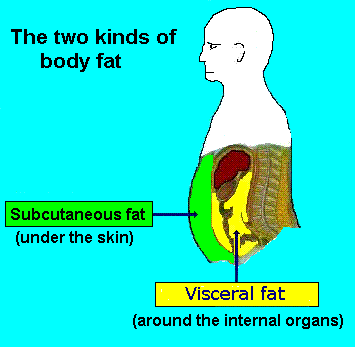
All fat is not created equal. Unsightly as it is, subcutaneous fat, the fat right under the skin, is not as dangerous to overall health as visceral fat, the fat deep in the belly surrounding vital organs.

According to a new study by researchers at Wake Forest Baptist Medical Center, the way to zero in and reduce visceral fat is simple: eat more soluble fiber from vegetables, fruit and beans, and engage in moderate activity.

The study found that for every 10-gram increase in soluble fiber eaten per day, visceral fat was reduced by 3.7 percent over five years. In addition, increased moderate activity resulted in a 7.4 percent decrease in the rate of visceral fat accumulation over the same time period.

“We know that a higher rate of visceral fat is associated with high blood pressure, diabetes and fatty liver disease,” said Kristen Hairston, M.D., assistant professor of internal medicine at Wake Forest Baptist and lead researcher on the study. “Our study found that making a few simple changes can have a big health impact.”

Ten grams of soluble fiber can be achieved by eating two small apples, one cup of green peas and one-half cup of pinto beans; moderate activity means exercising vigorously for 30 minutes, two to four times a week, Hairston added.

In the longitudinal study, published in the June 16 online issue of the journal Obesity, researchers examined whether lifestyle factors, such as diet and frequency of exercise, were associated with a five-year change in abdominal fat of African Americans and Hispanic Americans, populations at a disproportionally higher risk for developing high blood pressure and diabetes and accumulating visceral fat.

At the beginning of the study, which involved 1,114 people, the participants were given a physical exam, an extensive questionnaire on lifestyle issues, and a CT scan, the only accurate way to measure how much subcutaneous and visceral fat the participants had. Five years later, the exact same process was repeated.

Researchers found that increased soluble fiber intake was associated with a decreased rate of accumulated visceral fat, but not subcutaneous fat.

“There is mounting evidence that eating more soluble fiber and increasing exercise reduces visceral or belly fat, although we still don’t know how it works,” Hairston said. “Although the fiber-obesity relationship has been extensively studied, the relationship between fiber and specific fat deposits has not. Our study is valuable because it provides specific information on how dietary fiber, especially soluble fiber, may affect weight accumulation through abdominal fat deposits.”

Hairston’s next study, expected to be in clinical trials later this summer, will examine whether increasing soluble fiber with a widely available fiber supplement will produce similar results to those obtained in this study using soluble fiber from food.

The National Institutes of Health provides more information on soluble fiber.


SOURCE: Wake Forest Baptist Medical Center, news release, June 27, 2011


Related Posts in The Zestzfulness Library


Belly Fat May Weaken Bones

Dec 14, 2010 - A study presented at the annual meeting of the Radiological Society of North America (RSNA)1 found that young premenopausal women with excessive amounts of visceral fat2are at increased risk for osteoporosis. ...


Significant Belly Fat Loss Seen With Orlistat

Feb 27, 2010 - In the three-month randomized placebo controlled Visceral Fat Imaging Study (2) trial 26 overweight and obese subjects took orlistat 60 mg 3 times a day and ate a hypocaloric (reduced by 500 kcal) low-fat diet. ...


Moderate Exercise keeps Dangerous Belly Fat away

Feb 26, 2010 - Moderate amounts of exercise, involving the equivalent of walking 30 to 45 minutes a day five days a week, even without a change in diet can reduce the inflammation in visceral fat, or belly fat, that has been linked with metabolic ...


Extremes of sleep duration increase BMI, SAT, and VAT

Apr 02, 2010 - Sleep Duration and Five-Year Abdominal Fat Accumulation in a Minority Cohort: The IRAS Family Study. SLEEP 2010;33(3):289-295. * Visceral fat is not the fat that lies just under your skin, that type is called subcutaneous fat. ...


The Dangers of Belly Fat

Feb 05, 2010 - Visceral fat or belly fat is particularly dangerous because it produces inflammatory molecules that enter the bloodstream and increase the risk of heart disease and diabetes. Obese people have higher levels of circulating inflammatory ...


Brushing Teeth Less Than Twice a Day Nearly Triples Heart Disease Risk

Jun 02, 2010 - Periodontal Disease and Prostatitis. The Dangers of Belly Fat – the link between inflammation around the cells of visceral fat deposits, and the artery-hardening process of atherosclerosis. No, Not Hair Pulling.


Apple-shaped women at double risk of dementia

Mar 02, 2010 - Some of this fat resides just under the skin and is called subcutaneous fat. But much of it lies between and around the organs in the abdominal cavity—the liver, kidneys, pancreas and intestines—and is called visceral fat. ...


Zestzfulness: 80% OF STROKE RISK DUE TO 5 LIFESTYLE FACTORS

Jun 19, 2010 - Abdominal fat or visceral fat tissue is known to release various inflammatory cytokines (messenger proteins). During the course of ischaemic stroke, inflammatory mechanisms are among the important mediators of brain ...