Showing posts with label Celebrating the PRESENT. Show all posts

Wednesday, April 25, 2012

Positive Feelings May Help Protect Cardiovascular Health

Picture credit: i.huffpost.com
Over the last few decades numerous studies have shown negative states, such as depression, anger, anxiety, and hostility, to be detrimental to cardiovascular health. Less is known about how positive psychological characteristics are related to heart health.

In the first and largest systematic review on this topic to date, Harvard School of Public Health (HSPH) researchers found that positive psychological well-being appears to reduce the risk of heart attacks, strokes and other cardiovascular events.

The American Heart Association reports more than 2,200 Americans die of cardiovascular disease (CVD) each day, an average of one death every 39 seconds. Stroke accounts for about one of every 18 U.S. deaths.

The absence of the negative is not the same thing as the presence of the positive.

We found that factors such as optimism, life satisfaction, and happiness are associated with reduced risk of CVD regardless of such factors as a person’s age, socioeconomic status, smoking status, or body weight,” said lead author Julia Boehm, research fellow in the Department of Society, Human Development, and Health at HSPH.

“For example, the most optimistic individuals had an approximately 50% reduced risk of experiencing an initial cardiovascular event compared to their less optimistic peers,” she said.

Satisfaction, Optimism, and Happiness

In a review of more than 200 studies published in two major scientific databases, Boehm and senior author Laura Kubzansky, associate professor of society, human development, and health at HSPH, found there are psychological assets, like optimism and positive emotion, that afford protection against cardiovascular disease. It also appears that these factors slow the progression of disease.

To further understand how psychological well-being and CVD might be related, Boehm and Kubzansky also investigated well-being’s association with cardiovascular-related health behaviors and biological markers. They found that individuals with a sense of well-being engaged in healthier behaviors such as exercising, eating a balanced diet, and getting sufficient sleep. In addition, greater well-being was related to better biological function, such as lower blood pressure, healthier lipid (blood fat) profiles, and normal body weight.

If future research continues to indicate that higher levels of satisfaction, optimism, and happiness come before cardiovascular health, this has strong implications for the design of prevention and intervention strategies.

“These findings suggest that an emphasis on bolstering psychological strengths rather than simply mitigating psychological deficits may improve cardiovascular health,” Kuzbansky said.

Acknowledgement by the Zestzfulness Team
The above story is reprinted from the April 17, 2012 news release by the Harvard School of Public Health. The research finding was published online on the same day the journal of the American Psychological Association: Boehm JK, Kubzansky LD. The Heart’s Content: The Association between Positive Psychological Well-Being and Cardiovascular Health. Psychological Bulletin, online April 17, 2012.

Key Findings:

Evidence indicates that Positive psychological well-being (PPWB) and CVD are associated, independent of typical factors (e.g., socioeconomic status, smoking, body mass index, cholesterol) and negative psychological states, and based on studies of both patients and healthy populations.

PPWB appears to protect against both the incidence of CVD and, to a lesser extent, the progression of the disease.

Optimism seems to be the “most robust” measure of PPWB associated with reducing risks of CVD.

The mechanisms that link PPWB and CVD seem to include direct, biological pathways; indirect, behavioral pathways; restorative processes, such as sleep and antioxidants; and deteriorative processes, such as inflammation and smoking.

Tuesday, March 13, 2012

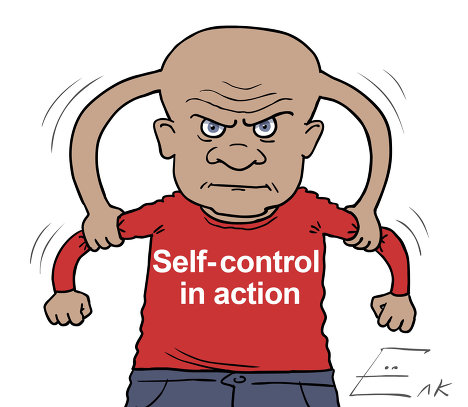
Want to Limit Aggression? Practice Self-Control!


Feeling angry and annoyed with others is a daily part of life, but most people don’t act on these impulses.


What keeps us from punching line-cutters or murdering conniving co-workers?


Self-control.


A new review article in Current Directions in Psychological Science examines the psychological research and finds that it’s possible to deplete self-control—or to strengthen it by practice.


Criminologists and sociologists have long believed that people commit violent crimes when an opportunity arises and they’re low on self-control. “It’s an impulsive kind of thing,” says Thomas F. Denson, a psychologist at the University of New South Wales. He cowrote the new article with C. Nathan DeWall at the University of Kentucky and Eli J. Finkel at Northwestern University. For the last 10 years or so, psychologists have joined this research, using new ways of manipulating self-control in experiments; they have found that, indeed, self-control and aggression are tightly linked.


A psychological scientist can deplete someone’s self-control by telling the subject they’re not allowed to take one of the cookies sitting in front of them. Studies have found that, after people have had to control themselves for a while, they behave more aggressively. In a 2009 study, after someone’s self-control was depleted, they were more likely to respond aggressively to nasty feedback that ostensibly came from their husband or girlfriend. Specifically, they assigned their partner to hold a painful yoga pose for longer.


On the other hand, it’s also possible to practice self-control the same way you would practice the piano. In Denson’s experiments, he has people try to use their non-dominant hand for two weeks. So, if they’re right-handed, they’re told to use their left hand “for pretty much anything that’s safe to do,” he says. “Using the mouse, stirring your coffee, opening doors. This requires people to practice self-control because their habitual tendency is to use their dominant hands.” After two weeks, people who have practiced self-control control their aggression better. In one experiment, they’re mildly insulted by another student and have the option of retaliating with a blast of white noise—but people who have practiced self-control respond less aggressively.


“I think, for me, the most interesting findings that have come out of this is that if you give aggressive people the opportunity to improve their self-control, they’re less aggressive,” Denson says. It’s not that aggressive people don’t want to control themselves; they just aren’t very good at it. In fact, if you put aggressive people in a brain scanner and monitor their brain activity while insulting them, the parts of the brain involved in self-control are actually more active than in less aggressive people. So it might be possible to teach people who struggle with anger or violence problems to control themselves more easily.


For people who aren’t inclined toward violence, it may also be useful to practice self-control—by trying to improve your posture, for example. In the short term, this can deplete self-control and make it harder to control your impulses. “But if you practice that over the long term, your self-control capacity gets stronger over time,” Denson says. “It’s just like practicing anything, really—it’s hard at first.” But, over time, it can make that annoying colleague easier to deal with.


< * >


The above story is reprinted from materials provided by Association for Psychological Science.


The article is published in the Current Directions in Psychological Science, a journal of the Association for Psychological Science: T. F. Denson, C. N. DeWall, E. J. Finkel. Self-Control and Aggression. Curr Dir Psychol Sci February 2012 21: 20-25, doi:10.1177/0963721411429451

Saturday, December 31, 2011

Future Visioning Meditation

Link

Picture “Cockatoo Landing” by Lee Meng Hock of Teluk Intan

Here’s a gift from Kevin, Matt and the rest of the Team at The Mind-Body Training Company.

Please download yourself a copy of their ‘Future Visioning’ meditation. This short meditation is reported to be a great way to manifest anything you desire. Try it!

Download The ‘Future Visioning Meditation’ Here
(Right Click & Select Save Target As/Save Link As)

Thursday, October 13, 2011

Celebrating the PRESENT : No Wants To Die


Shariff sent us a quotation from Steve Jobs.

Steve Jobs, the "creative genius" who revolutionised modern-day life with inventions like the iPhone, iPod and the iPad, died at the age of 56 following years of ill-health.

“No one wants to die. Even people who want to go to heaven don't want to die to get there. And yet death is the destination we all share. No one has ever escaped it. And that is as it should be, because Death is very likely the single best invention of Life. It is Life's change agent. It clears out the old to make way for the new. Right now the new is you, but someday not too long from now, you will gradually become the old and be cleared away. Sorry to be so dramatic, but it is quite true.

Your time is limited, so don't waste it living someone else's life. Don't be trapped by dogma — which is living with the results of other people's thinking. Don't let the noise of others' opinions drown out your own inner voice. And most important, have the courage to follow your heart and intuition. They somehow already know what you truly want to become. Everything else is secondary.”

These two paragraphs are part of a prepared text of the Commencement address delivered by Steve Jobs on June 12, 2005 at Stanford University. You can read the full text HERE.

Apple, the company Steve Jobs co-founded with Steve Wozniak in 1976, posted a tribute message on its website and called on fans to share their "thoughts, memories, and condolences" by emailing them at rememberingsteve@apple.com.


Saturday, October 1, 2011

The Four Principles of Spirituality


Picture credit: http://www.imagegossips.com

Edwin Ng, the bloke who sent us that piece of/on S.H.I.T., forwarded us something else that is even more overpowering… a great foundational philosophy for life!

The First Principle : “Whomsoever you encounter is the right one”

This means that no one comes into our life by chance. Everyone who is around us, anyone with whom we interact, represents something, whether to teach us something or to help us improve a current situation.

The Second Principle : Whatever happened is the only thing that could have happened”

Nothing, absolutely nothing of that which we experienced could have been any other way. Not even in the least important detail. There is no “If only I had done that differently…, then it would have been different…”. No. What happened is the only thing that could have taken place and must have taken place for us to learn our lesson in order to move forward. Every single situation in life, which we encounter, is absolutely perfect, even when it defies our understanding and our ego.

The Third Principle : “Each moment in which something begins is the right moment”

Everything begins at exactly the right moment, neither earlier nor later. When we are ready for it, for that something new in our life, it is there, ready to begin.

This is the Fourth Principle, the final one : “What is over, is over”

It is that simple. When something in our life ends, it helps our evolution. That is why, enriched by the recent experience, it is better to let go and move on.

Each time I read these four principles I feel more at peace with the things happening in and around my life.

Be Good To Yourself.

Love With Your Whole Being.

Always Be Happy

Thank You, Edwin...and John Ng (we 'tolerated' each other all the way from Standard One to Form Five) whose email dovetailed Edwin's.


Saturday, June 25, 2011

Teachers' Day


Picture Credit: http://www.perdaily.com

Teachers' Days are intended to be special days for the appreciation of teachers. May 16th is Teachers’ Day in Malaysia. World Teachers' Day is celebrated across the world on October 5. May 16 is gone and October 5 is too far away. So let’s celebrate World Teacher’s Day in advance with this witty piece which was forwarded to us by CWY1948 from Penang; original author unknown.


The dinner guests were discussing life.

Joe, a CEO, decided to explain the problem with education. He argued,” What’s a kid going to learn from someone who decided his best option in life was to become a teacher?"

To stress his point he said to another guest; "You're a teacher, Judy. Be honest. What do you make?"

Judy, who had a reputation for honesty and frankness replied, "You want to know what I make? (She paused for a second, then began...)

"Well, I make kids work harder than they ever thought they could

I make kids sit through 40 minutes of class time when their parents can't make them sit for 5 without an I Pod, Game Cube or movie rental.

You want to know what I make. (She paused again and looked at each and every person at the table)

I make kids wonder.

I make them question.

I make them apologize and mean it.

I make them have respect and take responsibility for their actions.

I teach them to write and then I make them write. Keyboarding isn't everything.

I make them read, read, read.

I make them show all their work in math. They use their God given brain, not the man-made calculator.

I make my students from other countries learn everything they need to know about English while preserving their unique cultural identity.

I make my classroom a place where all my students feel safe.

Finally, I make them understand that if they use the gifts they were given, work hard, and follow their hearts, they can succeed in life. (Judy paused one last time and then continued.)

Then, when people try to judge me by what I make, with me knowing money isn't everything, I can hold my head up high and pay no attention because they are ignorant. You want to know what I make. I MAKE A DIFFERENCE. What do you make Mr. CEO?

Joe's jaw dropped, he went silent.

THIS IS WORTH SENDING TO EVERY TEACHER, EVERY CEO, EVERY PERSON YOU KNOW.

Even to all your personal teachers like mothers, fathers, brothers, sisters, coaches and your spiritual leaders/teachers.

A Truly Profound Answer!

The Zestzfulness Team believes that Teaching is...

the profession that makes all other professions possible!

Wednesday, June 15, 2011

How to Remain Relevant When You’re Over 40

Picture Credit: http://rlv.zcache.com

Your earning potential pretty much tops out at age 40. This is because your skills become increasingly valuable until you amass fifteen years’ experience, at which point you’ve hit a peak. According to statisticians at PayScale.com, in all fields except law, people are not paid more money for experience beyond fifteen years.

This means that to remain relevant and continue to increase your value, you are going to have to learn skills outside of your field. Here are five skills you should pick up as your earning power is due to drop.

1. Community building.

Yes, this is an irritating buzzword for social media mavens who are probably fresh out of college and run their whole life on Facebook and tumblr. But the reality is, social media infiltrates everything, in the same way that email became essential 10 years ago. Ninety percent of messages today are via social media link, according to The Pinnacle Group, a New York City think tank. Only ten percent are via email. So we are already at that tipping point where you need to learn social media or go home. People who are exceptional with social media can build a community around themselves in order to get jobs, promotions, and do good works for their company. Here’s a first step: How to start a blog.

2. Information processing.

Remember the term “information overload”? That went out of fashion when hipsters made productivity blogs one of the most popular genre of blogs, and time management books hit the New York Times bestseller list. Today you are in a knowledge market, where knowledge workers trade on their ability to synthesize information faster and in more collaborative ways - or faster and in ways that are so innovative that their ideas stand out above the rest. Information processing requires a clear understanding of one’s priorities, and an insatiable curiosity. Starting point: Time management tips for multitaskers.

3. Bridge building.

People who change jobs frequently build a wider set of skills and a wider network - both of which make them more employable. Job hopping enables you to create a series of bridges as you move between companies. The workplace no longer provides secure jobs, but you can provide security for yourself by creating a dynamic career where you move from job to job. You can develop contacts and build relationships outside of a job, for sure, but if people don’t get the chance to work with you, then they can’t endorse your ability to work. Likewise, if you work in a company where people tend to job hop, you can still build this wide network providing you remain in touch with them after they move on.The best way to build a wide network is to actually work with a wide range of people.

Your resume, if you are doing this right, should reflect a significant, positive impact wherever you work, and you should leave in your wake a swarm of happy managers and co-workers who felt lucky to be on projects with you. That’s how strong the performance of a good job hopper is. Subset to this skill: How to quit a job.

4. Manage your personal brand.

If you try to build a community without having a clear sense of who you are, people will not feel connected to you. Each person you meet needs to have a clear understanding of your place in the industry. In a world in which people Google you before they meet you, it’s important to show a good face on the front page of those search results.

Of course, this means it’s important to have updated LinkedIN and Facebook profiles, and, if you are full of ideas, you can have a blog as well. But what you really need is a sense of who you are - what you are good at and where you are going. It can change, it always does, but you have to have your own elevator pitch. If you don’t understand who you are and what you do, then no one else can either. So give it a shot. It’s a work in progress, but it’s how you will maneuver through the workplace. Starting spot for overachievers: How to sell anything to anyone.

5. Commit to life-long learning.

One of the most difficult aspects of this quickly moving information age is how quickly skills and knowledge become obsolete. If you are constantly committed to learning, you are less likely to become obsolete (and therefore, unemployable). The faster you can adapt and recognize shifts in markets the better off you’ll be.

In general, it’s not about how old you are but how open you are to new ways of communicating. Aim to be open, widely networked, and adaptable to new ways of thinking. And in that vein, you should ask yourself routinely, what generation am I?

By Penelope Trunk | June 7, 2011

Penelope Trunk is the founder of three startups, most recently Brazen Careerist, a professional social network for young people. Previously she worked in marketing at Fortune 500 companies including Mattel and Hyundai. Her blog about career advice, blog.penelopetrunk.com, receives half a million visits a month and is syndicated in more than 200 newspapers. She frequently appears as a workplace commentator on CNN, 20/20 and FOX News. She's also the author of Brazen Careerist: The New Rules for Success, a bestselling career advice book for Generation Y.

Saturday, May 21, 2011

Want Lasting Love?


Picture credit: http://static.indianexpress.com

It's Not More Commitment, but Equal Commitment That Matters

It stands to reason that a well-loved child can become a loving adult. But what prepares us to make a strong commitment and work out differences with an intimate partner? And what happens when one person is more committed than the other?

Six researchers—M. Minda Oriña of St. Olaf College; W. Andrew Collins, Jeffry A. Simpson, Jessica E. Salvatore, and John S. Kim of the University of Minnesota and Katherine C. Haydon of the University of Illinois at Urbana-Champaign—used the rich mine of data in the Minnesota Longitudinal Study of Risk and Adaptation (MLSRA), coupled with a lab procedure, to look for the answers.

Their findings, which will be published in the June issue of Psychological Science, a journal of the Association for Psychological Science, suggest that supportive, involved mothering in toddlerhood and an ability to work through conflict in adolescence are good predictors of becoming the “strong link”—the person with the bigger stake—in adult relationships. If the opposite happened in earlier life, chances are the person will be the “weak link”—the one with one foot out the door.

Equally important, though, is what these predictors don’t account for: It’s good to be prepared for love. But it takes two to tango.

Interestingly, it’s not the partners’ individual commitments that make the most difference in the grace and longevity of the dance. It’s how well their levels of commitment match up. Two strong links will be benevolent and tolerant when the going gets rough. Two weak links may be lax about working things out, but their expectations are equally low—so there’s less friction.

But when a weak link and a strong link pair up, the one with less investment has more influence—and stability is the loser.

The researchers recruited 78 MLSRA participants, 20 or 21 years old, and their heterosexual romantic partners. A questionnaire assessing each participant’s level of commitment was analyzed alongside data from two earlier points in the longitudinal study. First, two-year-olds were observed doing a difficult task while their mothers looked on. Did their mother laugh, help, or ignore the child? Second, at 16, the subjects recounted dealing with a conflict with a best friend, and were assessed for relational attitudes and skills.

This time, each couple discussed—and tried to resolve—the problem that caused them the most conflict. Then they talked about the things they agreed on most. Their videotaped interactions were rated for the amount of hostility—coldness, rejection, and remorseless injury—and hopelessness about the relationship that each partner displayed, and how each tried to quell those in the other.

As expected, the couples with disparate commitments were the most hostile.

The study contributes to our understanding of how we learn to love well. When you’re a baby or a teenager, “you are learning to manage your own needs and those of the people you care about,” Oriña says. “You learn: Can I come forward with a problem? What can I expect of the other person? And how can I do this in a way that everyone wins?”

Source: Press Release of May 18, 2011 by the Association for Psychological Science
For a copy of the article "Developmental and Dyadic Perspectives on Commitment in Adult Romantic Relationships" and access to other APS journal
Psychological Science research findings, please contact Divya Menon at dmenon@psychologicalscience.org.

Wednesday, May 18, 2011

Dealing With Anxiety

LinkPicture credit: www.markstivers.com

SUGGESTIONS FOR HOW TO COPE

Anxiety can quickly spiral out of control and interfere with daily life.

But there are techniques that will allow you to regain control, the American Academy of Family Physicians says. The academy offers these suggestions:

  • Schedule 30 minutes each day to think about the things that are concerning you. Save your worry for those designated times. Think less about what will happen and concern yourself more with what's happening now.
  • Practice relaxation techniques such as muscle relaxation or deep breathing.
  • Get plenty of regular exercise and enough sleep.
  • Don't abuse drugs or drink alcohol.
  • Restrict or eliminate caffeine.
  • Deal with things that have caused you anxiety in the past. Start by visualizing how you will deal with these factors. Doing so will help you deal with them for real.
  • Talk about your fears with your doctor. He or she can help you devise a plan for how to better cope with your anxiety.

Click on the titles below for further reading:

1. Sleep Hygiene Tips

2. Stress.

3. Happiness Depends On You

For more inputs, simply type “Happiness” in the search box on the right column of this page. Also look up our posts labelled as "Celebrating the PRESENT"

Tuesday, May 17, 2011

Happy Birthday Buddha*

As millions of people worldwide observe the 2,600 anniversary of Buddha’s enlightenment, United Nations (UN) Secretary-General Ban Ki-moon paid tribute to the spiritual leader’s teaching on the need for compassion and solidarity with those less fortunate.

Addressing the General Assembly today (16 May), Ban said that “Buddhism and the United Nations share the goals of peace, dignity and human rights for all people” adding that that is why, more than ten years ago, the General Assembly passed a resolution on recognizing Vesak Day.

The Secretary-General said that Buddha’s teachings “may be twenty-six centuries old, but they are as powerful as ever today.” He called on everyone to remember Buddha’s message of tolerance and respect for all religions.

* Vesak Day marks the birth, enlightenment and passing of the Buddha.

Saturday, May 14, 2011

Why Deprivation Doesn’t Work–And What Does

At some point in your life you’ve probably tried dieting, saving, quiting a bad habit, or stopping negative thoughts by using the “deprivation” approach. In other words, the “just say no” approach. If you’re like most people, this may have worked for a short while and then backfired. You may have rebounded to feel an even stronger urge to do what you tried not to do—be it eating junk food, spending excessively, smoking, or negative self-talk.

Deprivation is what you might call a “resistant strategy.” As noted above, it is based on saying “no” to something. What happens with saying no is that you are still associating with whatever you are saying no to. The behavior you are resisting is still just as much a part of your thinking, feeling, and action—just in a negative sense. When you resist something, it persists in your field of awareness. You keep it alive by fighting against it. You are still caught in the same chain of association, just on the other side of the equation.

If you really want something to go away, don’t focus on it positively or negatively. Instead, pay attention to something else.

This brings us to a different strategy—substitution. Substitution takes advantage of the power of association in a different way. It takes an existing pattern of thought, feeling, and behavior and shifts it. Rather than focusing on saying “no” to something, you say “yes” to something else. When you are triggered in a way that usually elicits a certain thought, feeling, or behavior, you consciously pair that with a new thought, feeling, or behavior. If you repeat that new association enough times and it has enough positive emotion associated with it, it will become your new response pattern in that situation.

For example, if you want to let go of excess weight and find yourself triggered to eat fast food whenever you pass by it on your way to work, find a new route that passes by an awesome place to get tea. Order the absolute best tea they have, something that tastes really good, that you really enjoy, and make that your new habit.

If tea doesn’t do it for you because you really want to chew something, maybe you can find the greatest tasting, xylitol sweetened gum and substitute that. Or maybe a crisp, sweet, organic apple will do it for you.

The secret is to find an attractive substitute that creates the effect you want in your life. Find something positive and enjoyable to say “yes” to, instead of trying to enforce a “no.” Here are some other suggestions to spur your own creativity.

If you want to stimulate your mind and inspire your soul, record your favorite TV show, fast forward through the commercials and use the extra time to read something that fascinates you. You’ve just substituted inspiring reading for watching commercials.

If you know you need to exercise, but can’t stand sitting or standing on a cardio-machine or lifting weights, substitute taking a hike with a friend in a beautiful environment.

If you can’t seem to get to sleep at night, instead of spending time tossing and turning, try substituting meditation during your “falling asleep time.” Meditation will shift you from your busy-mind, beta brainwaves down a notch to slower alpha brainwaves, which will lead you closer to a sleep state. It will also enable your mind to let go of the events of the day, so that, when you do sleep, it is more restful.

If you have a behavior you’d like to let go of, find a positive substitute that you look forward to and put that in its place.

By Kevin Schoeninger of The Mind-Body Training Company

Kevin also talks about using substitution with negative feelings, thoughts, and beliefs. Check out “Secrets of Meditation” to learn more.

Thursday, May 5, 2011

What thing about humanity surprises you the most?

Picture credit: celticrebel.files.wordpress.com


"Man…. Because he sacrifices his health in order to make money. Then he sacrifices money to recuperate his health. And then he is so anxious about the future that he does not enjoy the present; the result being that he does not live in the present or the future; he lives as if he is never going to die, and then dies having never really lived." (Dalai Lama)


Recommended by KC, Bayan Baru

Monday, April 25, 2011

Life can begin at 60, it is all in your hands!


Your browser may not support display of this image.

Many people feel unhappy, health-wise and security-wise, after 60 years of age owing to the diminishing importance given to them and their opinion. But it need not be so, if only we understand the basic principles of life and follow them scrupulously. Here are ten mantras to age gracefully and make life after retirement pleasant.

1. Never say ‘I am aged': There are three ages, chronological, biological, and psychological. The first is calculated based on our date of birth; the second is determined by the health conditions and the third is how old you feel you are. While we don't have control over the first, we can take care of our health with good diet, exercise and a cheerful attitude. A positive attitude and optimistic thinking can reverse the third age.

2. Health is wealth: If you really love your kith and kin, taking care of your health should be your priority. Thus, you will not be a burden to them. Have an annual health check-up and take the prescribed medicines regularly. Do take health insurance cover.

3. Money is important: Money is essential for meeting the basic necessities of life, keeping good health and earning family respect and security. Don't spend beyond your means even for your children. You have lived for them all through and it is time you enjoyed a harmonious life with your spouse. If your children are grateful and they take care of you, you are blessed. But never take it for granted.

4. Relaxation and recreation: The most relaxing and recreating forces are a healthy religious attitude, good sleep, music and laughter. Have faith in God, learn to sleep well, love good music and see the funny side of life.

5. Time is precious: It is almost like holding a horse's reins. When they are in your hands, you can control them. Imagine that everyday you are born again. Yesterday is a cancelled cheque. Tomorrow is a promissory note. Today is ready cash — use it profitably. Live this moment.

6. Change is the only permanent thing: We should accept change — it is inevitable. The only way to make sense out of change is to join the dance. Change has brought about many pleasant things. We should be happy that our children are blessed.

7. Enlightened selfishness: All of us are basically selfish. Whatever we do, we expect something in return. We should definitely be grateful to those who stood by us. But our focus should be on the internal satisfaction and happiness we derive by doing good to others, without expecting anything in return.

8. Forget and forgive: Don't be bothered too much about others' mistakes. We are not spiritual enough to show our other cheek when we are slapped in one. But for the sake of our own health and happiness, let us forgive and forget them. Otherwise, we will be only increasing our BP.

9. Everything has a purpose: Take life as it comes. Accept yourself as you are and also accept others for what they are. Everybody is unique and right in his own way.

10. Overcome the fear of death: We all know that one day we have to leave this world. Still we are afraid of death. We think that our spouse and children will be unable to withstand our loss. But the truth is no one is going to die for you; they may be depressed for some time. Time heals everything and they will carry on.

By S. Ramachandran, published in The Hindu of August 1, 2010 and recommended by Lakmali of Penang

Saturday, April 16, 2011

3 Steps to Jumpstart Happiness Today


Picture Credit: www.pickthebrain.com

In a famous quote, author and tireless peace activist, Thich Nhat Hanh said, "There is no way to happiness, happiness is the way."

In the world of therapy, sometimes I ask people to consider 3 steps to get themselves out of a rut.

First, I ask them to think of times when they were feeling well and ask them what they were doing? How were they thinking? Some say:

I was taking more walks

I was talking to friends more

I was more hopeful about the future

I was playing guitar more

I was waking up earlier

I was doing more yoga

I was eating healthier

I was smiling more

Etc...

Second, I tell people to integrate these activities into their calendar. Not in an effort to fake it until you make it, but because our bodies, thoughts, emotions, and behavior are interlinked to cultivate our experience. Therefore, if we change one, we can affect them all. In changing our behavior to reflect behavior that is experienced when we are feeling well, we can influence the other three in a positive direction.

Third, notice automatic negative thoughts (ANTs) such as "this is stupid" or "this will never work" or "what's the point". When you notice them, know that they are a product of not feeling well and are not facts. The gently redirect your attention back to the behavior.

Try it out, don't take my word for it, and let your own experience be the teacher!

As always, please share your thoughts, stories, and questions below. Your interactions provide a living wisdom for us all to benefit from.

Elisha Goldstein, Ph.D. is a Clinical Psychologist and conducts a private practice in West Los Angeles. He is co-author of A Mindfulness-Based Stress Reduction Workbook (New Harbinger, February 2010). Check out Dr. Goldstein's acclaimed CD's on Mindful Solutions for Stress, Anxiety, and Depression.

Wednesday, April 13, 2011

Learning From A Kid


Picture Credit: img.ezinemark.com

Anh Hà Minh Thành là người Việt Nam hiện đang công tác trong lực lượng cảnh sát Nhật Bản; Hiện anh Hà Minh Thành đang tham gia cứu nạn động đất tại vùng Fukushima… Nhấn vào đây để biết thêm

OK, we don’t understand Vietnamese too. So here's a translation by NAM editor, Andrew Lam, author of East Eats West: Writing in Two Hemispheres. [His first book, Perfume Dreams, Reflections on the Vietnamese DIaspora won a 2006 Pen Award.]

It’s about a letter written by a Vietnamese immigrant, working in Fukishima as a policeman to a friend in Vietnam, which has been circulating on Facebook among the Vietnamese diaspora. It is an extraordinary testimony to the strength and dignity of the Japanese spirit, and an interesting slice of life near the epicenter of Japan’s current crisis, the Fukushima nuclear power plant.

Brother,

How are you and your family? These last few days, everything was in chaos. When I close my eyes, I see dead bodies. When I open my eyes, I also see dead bodies. Each one of us must work 20 hours a day, yet I wish there were 48 hours in the day, so that we could continue helping and rescuing folks.

We are without water and electricity, and food rations are near zero. We barely manage to move refugees before there are new orders to move them elsewhere.

I am currently in Fukushima, about 25 kilometers away from the nuclear power plant. I have so much to tell you that if I could write it all down, it would surely turn into a novel about human relationships and behaviors during times of crisis.

The other day I ran into a Vietnamese-American. His name is Toan. He is an engineer working at the Fukushima 1 nuclear plant, and he was wounded right at the beginning, when the earthquake struck. With the chaos that ensued, no one helped him communicate with his family. When I ran into him I contacted the US embassy, and I have to admit that I admire the Americans’ swift action: They sent a helicopter immediately to the hospital and took him to their military base.

But the foreign students from Vietnam are not so lucky. I still haven't received news of them. If there were exact names and addresses of where they work and so on, it would be easier to discover their fate. In Japan, the police do not keep accurate residential information the way they do in Vietnam, and privacy law here makes it even more difficult to find.

I met a Japanese woman who was working with seven Vietnamese women, all here as foreign students. Their work place is only 3 kilometers from the ocean and she said that they don’t really understand Japanese. When she fled, the students followed her, but when she checked back they were gone. Now she doesn't know if they managed to survive. She remembers one woman’s name: Nguyen thi Huyen (or Hien).

No representatives from the Vietnamese embassy have shown up, even though on the Vietnamese Internet news sites they claim to be very concerned about Vietnamese citizens in Japan - all of it a lie.

Even us policemen are going hungry and thirsty, so can you imagine what those Vietnamese foreign students are going through? The worst things here right now are the cold, the hunger and thirst, the lack of water and electricity.

People here remain calm - their sense of dignity and proper behavior are very good - so things aren’t as bad as they could be. But given another week, I can’t guarantee that things won't get to a point where we can no longer provide proper protection and order. They are humans after all, and when hunger and thirst override dignity, well, they will do whatever they have to do. The government is trying to provide air supply, bringing in food and medicine, but it’s like dropping a little salt into the ocean.

Brother, there are so many stories I want to tell you - so many, that I don’t know how to write them all. But there was a really moving incident. It involves a little Japanese boy who taught an adult like me a lesson on how to behave like a human being:

Last night, I was sent to a little grammar school to help a charity organization distribute food to the refugees. It was a long line that snaked this way and that and I saw a little boy around 9 years old. He was wearing a t-shirt and a pair of shorts.

It was getting very cold and the boy was at the very end of the line. I was worried that by the time his turn came there wouldn’t be any food left. So I spoke to him.

He said he was in the middle of PE at school when the earthquake happened. His father worked nearby and was driving to the school. The boy was on the third floor balcony when he saw the tsunami sweep his father’s car away. I asked him about his mother. He said his house is right by the beach and that his mother and little sister probably didn’t make it. He turned his head and wiped his tears when I asked about his relatives.

The boy was shivering so I took off my police jacket and put it on him. That’s when my bag of food ration fell out. I picked it up and gave it to him. “When it comes to your turn, they might run out of food. So here’s my portion. I already ate. Why don’t you eat it.”

The boy took my food and bowed. I thought he would eat it right away, but he didn't. He took the bag of food, went up to where the line ended and put it where all the food was waiting to be distributed. I was shocked. I asked him why he didn’t eat it and instead added it to the food pile …

He answered: “Because I see a lot more people hungrier than I am. If I put it there, then they will distribute the food equally.”

When I heard that I turned away so that people wouldn't see me cry. It was so moving -- a powerful lesson on sacrifice and giving. Who knew a 9-year-old in third grade could teach me a lesson on how to be a human being at a time of such great suffering? A society that can produce a 9- year-old who understands the concept of sacrifice for the greater good must be a great society, a great people.

It reminds me of a phrase that I once learned in school, a capitalist theory from the old man, Fuwa [Tetsuzo], chairman of the Japanese Communist Party: “If Marx comes back to life, he will have to add a phrase to his book, Capital, and that ‘Communist ideology is only successful in Japan.’”

Well, a few lines to send you and your family my warm wishes. The hours of my shift have begun again.

- Ha Minh Thanh

We can learn from more than just this scrawny kid, we can learn from a whole nation! The courage and dignity of the Japanese people in the face of monumental catastrophes has been a moving and humbling experience. The Zestsfulness Team sends its RESPECT and BEST WISHES to the People of Japan.

Story recommended by Lakmali

Monday, April 11, 2011

How To Stop The Blame Game


Picture Credit : Tandberg

Blaming only escalates and dramatizes any situation.

Instead, the moment you recognize yourself getting upset, see if you can shift into “neutral.” That doesn’t mean denying your feelings, it means observing them. It doesn’t mean disregarding what someone else is doing, it means seeing it without reacting. It doesn’t mean inaction, it means pausing to discern productive action.

Here are some steps that can help us to access neutral and initiate resolution:

1. Take a break from the situation. Call time-out and step away for a moment. You could say, “I’m feeling a little overwhelmed. Do you mind if I take a break for a few minutes? I’ll be right back.”

2. Walk, stretch, shake out your body, and take several deep breaths.

3. Imagine that you are looking down on the situation from above it. Witness yourself and the others involved from a higher perspective.

4. Re-enter the situation by asking to hear the other person’s point of view. You could say, “Can we start again? Would you begin by telling me your side?”

5. Listen with full attention on what the other person is saying, eye contact, and unconditional positive regard—without countering with your opinion. Repeat back to them what you heard them say to make sure you got it right. For instance, “So, are you saying ________.”

6. State your point of view taking into account what the other person has said.

With the above steps in mind, as you go through the day or take in the news, notice how much “blaming” tends to rule interactions in our world. Each of us can make a difference in that.

by Kevin Schoeninger
L
ife coach, meditation instructor, and trainer with 30 years experience working with clients like you. Kevin brings a wealth of knowledge, genuine compassion, and a sincere intent to support your ideal possibilities and encourage you on your path.

Friday, April 8, 2011

The Cab Driver and the Old Lady

Picture Credit: www.greghornjudge.com


Twenty years ago, I drove a cab for a living.

When I arrived at 2:30 a.m., the building was dark except for a single light in a ground floor window. Under these circumstances, many drivers would just honk once or twice, wait a minute, then drive away.

But, I had seen too many impoverished people who depended on taxis as their only means of transportation. Unless a situation smelled of danger, I always went to the door. This passenger might be someone who needs my assistance, I reasoned to myself. So I walked to the door and knocked. "Just a minute", answered a frail, elderly voice.

I could hear something being dragged across the floor. After a long pause, the door opened. A small woman in her 80's stood before me. She was wearing a print dress and a pillbox hat with a veil pinned on it, like somebody out of a 1940s movie. By her side was a small nylon suitcase.

The apartment looked as if no one had lived in it for years. All the furniture was covered with sheets. There were no clocks on the walls, no knickknacks or utensils on the counters. In the corner was a cardboard box filled with photos and glassware. "Would you carry my bag out to the car?" she said.

I took the suitcase to the cab, then returned to assist the woman. She took my arm and we walked slowly toward the curb. She kept thanking me for my kindness. "It's nothing", I told her. "I just try to treat my passengers the way I would want my mother treated". "Oh, you're such a good boy", she said.

When we got in the cab, she gave me an address, then asked, "Could you drive through downtown?" "It's not the shortest way," I answered quickly. "Oh, I don't mind," she said. "I'm in no hurry. I'm on my way to a hospice". I looked in the rear-view mirror. Her eyes were glistening. "I don't have any family left," she continued. "The doctor says I don't have very long."

I quietly reached over and shut off the meter.
"What route would you like me to take?" I asked.
For the next two hours, we drove through the city.
She showed me the building where she had once worked as an elevator operator.

We drove through the neighbourhood where she and her husband had lived when they were newlyweds. She had me pull up in front of a furniture warehouse that had once been a ballroom where she had gone dancing as a girl. Sometimes she'd ask me to slow in front of a particular building or corner and would sit staring into the darkness, saying nothing.

As the first hint of sun was creasing the horizon, she suddenly said, "I'm tired. Let's go now." We drove in silence to the address she had given me. It was a low building, like a small convalescent home, with a driveway that passed under a portico. Two orderlies came out to the cab as soon as we pulled up. They were solicitous and intent, watching her every move. They must have been expecting her.

I opened the trunk and took the small suitcase to the door.
The woman was already seated in a wheelchair. "How much do I owe you?" she asked, reaching into her purse. "Nothing," I said. "You have to make a living," she answered. "There are other passengers," I responded. Almost without thinking, I bent and gave her a hug. She held onto me tightly. "You gave an old woman a little moment of joy," she said. "Thank you." I squeezed her hand, then walked into the dim morning light.

Behind me, a door shut. It was the sound of the closing of a life. I didn't pick up any more passengers that shift. I drove aimlessly lost in thought. For the rest of that day, I could hardly talk. What if that woman had gotten an angry driver, or one who was impatient to end his shift? What if I had refused to take the run, or had honked once, then driven away? On a quick review, I don't think that I have done anything more important in my life.

We're conditioned to think that our lives revolve around great moments. But great moments often catch us unaware-beautifully wrapped in what others may consider a small one.
PEOPLE MAY NOT REMEMBER EXACTLY WHAT 'YOU DID, OR WHAT YOU SAID, ~BUT ~ THEY WILL ALWAYS REMEMBER HOW YOU MADE THEM FEEL.

You won't get any big surprise in 10 days if you send it to ten people. But, you might help make the world a little kinder and more compassionate by sending it on.

Thank you, my friend....

Recommended by Edwin of Klang, author unknown.

The Zestzfulness Team apologises for not being able to post a recent photo of the Old Lady. We sincerely hope this outdated shot will not distract you from the essence of this humanist parable.


Friday, March 18, 2011

How to Generate Positive Feelings


Focus your awareness in your heart and take ten deep breaths imagining that you are breathing in and out through your heart. You will likely feel more relaxed and centered. Rest your mind in the space of your heart and continue breathing slowly and deeply until you find your calm center.

Once you are there, you are ready to activate positive feelings. You can begin by smiling. Go ahead and smile and notice how that simple action shifts your inner feeling immediately. Smiling has a positive effect down to the cellular level. It produces positive neuro-chemistry, boosts your immune response, and bathes your body and brain in positive energy.

Now, imagine that your heart is smiling. Allow the feeling of smiling to warm and relax the space in and around your heart. To increase the feeling, you can imagine a time when you were really happy, or imagine a beloved pet or someone that you love unconditionally, as you continue to smile into your heart.

Spend a few minutes and enjoy the sensation. Record that smiling feeling in your heart, so that you can come back to it at any time.

Enjoy!

Kevin Schoeninger

Mind Body Training Community


Photo credit : KC Khoo (email: chnuah@yahoo.com.au )

Monday, March 7, 2011

Regrets of the Dying

For many years I worked in palliative care. My patients were those who had gone home to die. Some incredibly special times were shared. I was with them for the last three to twelve weeks of their lives.

People grow a lot when they are faced with their own mortality. I learned never to underestimate someone's capacity for growth. Some changes were phenomenal. Each experienced a variety of emotions, as expected, denial, fear, anger, remorse, more denial and eventually acceptance. Every single patient found their peace before they departed though, every one of them.

When questioned about any regrets they had or anything they would do differently, common themes surfaced again and again. Here are the most common five:

1. I wish I'd had the courage to live a life true to myself, not the life others expected of me.

This was the most common regret of all. When people realise that their life is almost over and look back clearly on it, it is easy to see how many dreams have gone unfulfilled. Most people have had not honoured even a half of their dreams and had to die knowing that it was due to choices they had made, or not made.

It is very important to try and honour at least some of your dreams along the way. From the moment that you lose your health, it is too late. Health brings a freedom very few realise, until they no longer have it.

2. I wish I didn't work so hard.

This came from every male patient that I nursed. They missed their children's youth and their partner's companionship. Women also spoke of this regret. But as most were from an older generation, many of the female patients had not been breadwinners. All of the men I nursed deeply regretted spending so much of their lives on the treadmill of a work existence.

By simplifying your lifestyle and making conscious choices along the way, it is possible to not need the income that you think you do. And by creating more space in your life, you become happier and more open to new opportunities, ones more suited to your new lifestyle.

3. I wish I'd had the courage to express my feelings.

Many people suppressed their feelings in order to keep peace with others. As a result, they settled for a mediocre existence and never became who they were truly capable of becoming. Many developed illnesses relating to the bitterness and resentment they carried as a result.

We cannot control the reactions of others. However, although people may initially react when you change the way you are by speaking honestly, in the end it raises the relationship to a whole new and healthier level. Either that or it releases the unhealthy relationship from your life. Either way, you win.

4. I wish I had stayed in touch with my friends.

Often they would not truly realise the full benefits of old friends until their dying weeks and it was not always possible to track them down. Many had become so caught up in their own lives that they had let golden friendships slip by over the years. There were many deep regrets about not giving friendships the time and effort that they deserved. Everyone misses their friends when they are dying.

It is common for anyone in a busy lifestyle to let friendships slip. But when you are faced with your approaching death, the physical details of life fall away. People do want to get their financial affairs in order if possible. But it is not money or status that holds the true importance for them. They want to get things in order more for the benefit of those they love. Usually though, they are too ill and weary to ever manage this task. It is all comes down to love and relationships in the end. That is all that remains in the final weeks, love and relationships.

5. I wish that I had let myself be happier.

This is a surprisingly common one. Many did not realise until the end that happiness is a choice. They had stayed stuck in old patterns and habits. The so-called 'comfort' of familiarity overflowed into their emotions, as well as their physical lives. Fear of change had them pretending to others, and to their selves, that they were content. When deep within, they longed to laugh properly and have silliness in their life again.

When you are on your deathbed, what others think of you is a long way from your mind. How wonderful to be able to let go and smile again, long before you are dying.

Life is a choice. It is YOUR life. Choose consciously, choose wisely, choose honestly. Choose happiness.

Bronnie Ware is a writer, singer/songwriter, songwriting teacher and speaker from Australia. She has lived nomadically for most of her adult life. Bronnie shares her inspiring observations and the insights gained along the way through the diversity of her work.

Thursday, December 30, 2010

Know Thyself : It's Enlightening!

Know Thyself

By Wendy Strgar

I write entirely to find out what I’m thinking, what I’m looking at, what I see and what it means, what I want, and what I fear. -Joan Didion

This daily discipline of coming to terms with my daily life and myself in its midst could be called an exercise in self awareness. I have recognized more of myself – both the flaws and the gifts of who I am from this year of writing than probably any other single activity I have ever done. I have come to witness myself, or as Eleanor Roosevelt once described it: “Somehow we learn who we really are and then live with that decision.”

Finding a clear vision of oneself that looks authentically at not only what we are doing, but more importantly how we do it every day, changes you. Your consciousness changes when you witness your abilities, frailties and virtues. You become responsible for yourself and kinder to yourself in the process because you are no longer a stranger to yourself. Most people don’t take the time and effort it takes to become one’s own friend. Worse still most of us are never taught that this first friendship to ourselves is the one that will make the difference about all the rest.

Doubt and fear about our own self worth is the most common of all human diseases of the heart. Even the most successful people in the world are often dogged and coerced by the parts of themselves they most want to avoid. The tragic thing about our broken pieces is that the longer we push them away and underground, the more broken they become. They grow in our avoidance and even as we avert our eyes or try any number of ways to deny them, they take up more room inside of us.

Here is a simple magic that I promise you works. Whatever is most hidden and dark is only seeking your recognition. All that we need to do is shine a light on the deep corners inside of us. The grief, fear, and guilt shrink as we witness it. Allowing the feelings to exist and pass through our bodies is how they leave us. Even the fears that seem as though they will paralyze us if we look in their direction, they too will let go their hold, just by resting our gaze on them.

Know thyself. This is the first great commandment of living a human life on earth. Lao Tzu put it like this: “Knowing others is wisdom, knowing yourself is Enlightenment.”

Wendy Strgar, owner of Good Clean Love, is a loveologist who writes and lectures on Making Love Sustainable, a green philosophy of relationships which teaches the importance of valuing the renewable resources of love and family. Wendy helps couples tackle the questions and concerns of intimacy and relationships, providing honest answers and innovative advice. Wendy lives in Eugene, Oregon with her husband, a psychiatrist, and their four children ages 11-20.

Picture Credit : CartoonStock.Com