Tuesday, September 7, 2010

How Fish Oils Work Against Inflammation and Diabetes

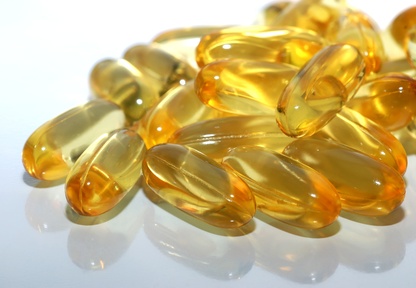
Omega-3 fatty acids have been long associated with anti-inflammatory effects; however the mechanisms behind such effects have been poorly understood.

Jerrold Olefsky, MD, and colleagues at the University of California, San Diego School of Medicine have recently identified the molecular mechanism that involves activation of G-protein receptor called GPR120 in macrophages.

Macrophages are specialized white blood cells that engulf and digest cellular debris and pathogens. Part of this immune system response involves the macrophages secreting cytokines and other proteins that cause inflammation, a method for destroying cells and objects perceived to be harmful.

Obesity and diabetes are closely correlated. Obese fat tissue contains lots of these macrophages producing lots of cytokines. The result can be chronic inflammation and rising insulin resistance in neighboring cells over-exposed to cytokines.

Insulin resistance is the physical condition in which the natural hormone insulin becomes less effective at regulating blood sugar levels in the body, leading to myriad and often severe health problems, most notably type 2 diabetes mellitus.

The GPR120 receptor is found only on pro-inflammatory macrophages in mature fat cells. The researchers used GPR120 knock-out mice to investigate if omega-3 leads to GPR120-mediated anti-inflammatory and insulin sensitizing effects in vivo.

When knock-out mice, mice without GPR 120 receptors, were fed a high-fat diet and treated with omega-3 fatty acids, they showed all the signs of inflammation and the insulin resistance that leads to diabetes with omega-3 having no effect. Normal mice on a high-fat diet still gained weight, however, omega-3s "had a really robust effect in preventing inflammation," Olefsky said.

How these findings can be interpreted for humans is not yet clear, but a large number of people are already supplementing their diets with fish oil and an omega-3 prescription drug is already on the market as an adjunct treatment for severe hypertriglyceridemia.

Olefski says it is too early to make any formal reccomendations at the moment, but highlights that he does not see any problem with people taking omega-3 supplementations "as long as it isn't in enormous doses."

Journal Reference:

Da Young Oh, Saswata Talukdar, Eun Ju Bae, Takeshi Imamura, Hidetaka Morinaga, WuQiang Fan, Pingping Li, Wendell J. Lu, Steven M. Watkins, Jerrold M. Olefsky. GPR120 Is an Omega-3 Fatty Acid Receptor Mediating Potent Anti-inflammatory and Insulin-Sensitizing Effects. Cell, 2010; 142 (5): 687-698


What is a knockout mouse?

A knockout mouse is a laboratory mouse in which researchers have inactivated, or "knocked out," an existing gene by replacing it or disrupting it with an artificial piece of DNA. The loss of gene activity often causes changes in a mouse's phenotype, which includes appearance, behavior and other observable physical and biochemical characteristics.

Knocking out the activity of a gene provides valuable clues about what that gene normally does. Humans share many genes with mice. Consequently, observing the characteristics of knockout mice gives researchers information that can be used to better understand how a similar gene may cause or contribute to disease in humans.
Photo Credit

注意了,各位沙發土豆!

適當的運動對老年人的認知功能有所助益。

人類的大腦無論是休息或處在不同的認知系統時,都是由不同的功能網絡所組成, 當我們漸漸老去時,這些聯結性就會逐漸的減弱。低運結意味著不同的電路零件不同步工作。這就有如一位缺乏訓練的運動員陳列在整齊的隊伍當中。造成大腦的運作不同發揮最佳的效率及速度。

現在,一批上了年級的沙發土豆証明即使是中度的運動,如以每星期三 次, 每次 四十分鐘的長度進行原地踏步的運動。都可以很有效的加強大腦重要電路的運結,進而對抗因年齡老化而腦退化的現象及增進認知的效率。

由伊利諾伊大學的克萊默針對六十五位年齡介於五十九岁至八十岁的成年人所展開的研究顯示,凡是加入步行組、伸展組或調理組長達一年,所有的參於研究的調查者都是沙發土豆,在過去六個月沒有連續做過兩次超過三十分鐘的身體運動。有關的研究也同時測試了三十二位相對年輕的成人(十八岁至三十二岁)之大腦活動。

研究的結果顯示,有氧訓練改善腦老化的休息功能效率到更高層次的認知網路。一年持續的散步則增加對腦功能障礙的老齡化的對抗本錢。

此前有研究顯示,老年人誰有更好的反應是因其在DMN這區域的運接比他的同儕來的更好。連接的越高,在一些認知事務上表現的就越好,這部份在我們處理執行控制事務方面更為明顯,這些事情包括計劃,排程,處理模糊度,工作記憶及多任務同時處理,這些技巧更會隨著年齡的老化而減弱。

盡管年齡是造成阿尔海默症的主要危險因子之一,流行病學的研究顯示,生活的習慣如規律的運動可以減少得到認知障礙和阿尔海默症的機會。

沙發土豆,現在開始步行吧或你的年齡最終無處可行!
Photo Credit

Sunday, September 5, 2010

To Live In What Is

How to Stop Struggling Through Life

Sometimes I feel the weight of the past pressing me exhonorably on into the same all too repeating patters. The form may change but fundamentally the essence remains unchanged. However, in the moment of greatest weight the load itself comes clearly into focus and so can be cast off. At that moment it’s easy to see the constraints on my behavior. They are largely the product of inertia. They are there. For whatever reason.

And then the consideration – no matter what triviality you loose yourself momentarily in there is only this. Just this. So in moments of deep connection, enjoy it. Revel in it. And do so by simply being completely there and present with it. Don’t judge. Don’t compare. Don’t even use words to think about it.

Since you alone are responsible for your thoughts, only you can change them. You will want to change them when you realize that each thought creates according to its own nature. Remember that the law works at all times and that you are always demonstrating according to the kind of thoughts you habitually entertain. Therefore, start now to think only those thoughts that will bring you health and happiness. - Paramahansa Yogananda

The other day I realized three very different things. The first was that I enjoy the style of my own handwriting. The second wasn’t new to me. However it struck me again that I have the persistent wish to be as up front and open in my relationships with other as possible. Simple and uncomplicated.

The third struck me like a well aimed punch I didn’t see coming. I suddenly understood the sheer genius of meditating on the breath. By relaxing and letting go of distractions such as thoughts and physical sensations during meditation and returning gently to the breath (not forcefully concentrating!) one is practicing how to let go and live in the present moment. To live in what is and not the crazy made up story in our heads that causes us no end of needless worry, fear and suffering.

See if you can catch yourself complaining in either speech or thought, about a situation you find yourself in, what other people do or say, your surroundings, your life situation, even the weather. To complain is always nonacceptance of what is. It invariably carries an unconscious negative charge. When you complain, you make yourself a victim. Leave the situation or accept it. All else is madness. - Eckhart Tolle

As the meditation continues one inevitably discovers oneself caught up in some distraction again so that the sense of being aware, consciousness itself, is forgotten. We lose ourselves. Only, in meditation on the breath, the exercise is to realize that distraction has occurred, gently let go, relax and return to the breath. This isn’t a forcing associated with concentration. That will only cause tension.

The return to the breath is only possible because of the relaxing and letting go. Through practice one becomes able to realize quicker and quicker that distraction has occurred. Till the point is reached where distraction is recognized before it can take form and is let go of so swiftly distraction never actually occurs.

Thus, through practice one becomes able to live in the constant wondrous ineffable present. And as it turns out the present is very simple. There isn’t anything to worry about or be afraid of in the present. Something is either not happening or if it is there is no such thing as worrying about a moment that is occurring.

By Stephen Cox @ Balanced Existence

Picture credit

Vinegar - the Natural Fat-Fighter

Vinegar is found in many salad dressings, pickles, and other foods, and used as a folk medicine since ancient times.

Modern scientific research suggests that acetic acid, the main component of vinegar, may help control blood pressure, blood sugar levels, and fat accumulation.

Researchers in Japan reported new evidence that vinegar can help prevent accumulation of body fat and weight gain. Their study showed that laboratory mice fed a high-fat diet and given acetic acid developed significantly less body fat (up to 10 percent less) than other mice.

Here’s what they wrote:

“Significant increases were observed in the expressions of genes for peroxisome-proliferator-activated receptor alpha (PPARalpha) and for fatty-acid-oxidation- and thermogenesis-related proteins: acetyl-CoA oxidase (ACO), carnitine palmitoyl transferase-1 (CPT-1), and uncoupling protein-2 (UCP-2), in the liver of the AcOH-treatment groups. PPARalpha, ACO, CPT-1, and UCP-2 gene expressions were increased in vitro by acetate addition to HepG2 cells. However, the effects were not observed in cells depleted of alpha2 5'-AMP-activated protein kinase (AMPK) by siRNA.”

In simple language, it means is that acetic acid fights fat by turning on genes for fatty acid oxidation enzymes. The genes churn out proteins involved in breaking down fats, thus suppressing body fat accumulation in the body.

Journal Reference:

Kondo T, Kishi M, Fushimi T, Kaga T. Acetic Acid Upregulates the Expression of Genes for Fatty Acid Oxidation Enzymes in Liver To Suppress Body Fat Accumulation. Journal of Agricultural and Food Chemistry. 2009 Jul 8;57(13):5982-6.

32oz Bragg Organic Apple Cider Vinegar plus 250gm of New Zealand Raw Unblended Clover Honey,
all for ONLY RM26.10 Offer valid whilst stocks last

When You Have An Awful Day At Work

Try this:

Stop at your pharmacy and go to the thermometer section and purchase a rectal thermometer made by Johnson & Johnson.

When you get home, lock your doors, draw the curtains and disconnect the phone so you will not be disturbed.

Change into very comfortable clothing and sit in your favorite chair. Open the package and remove the thermometer.

Carefully place it on a table or a surface so that it will not become chipped or broken.

Take out the literature from the box and read it, paying attention to the statement in fine print:

"Every Rectal Thermometer made by Johnson & Johnson is personally tested and then sanitized."

Now, close your eyes and repeat aloud five times, 'I am so glad I do not work in the thermometer quality control department at
Johnson & Johnson.'

Author unknown, forwarded by an old classmate of Mr Khoo…..believe us, they are both quite old! ;-)

Have a Nice Day; and remember, there's always someone else with a job that is more of a pain in the rear than yours!

Picture Credit

Saturday, September 4, 2010

Aspartame

Aspartame is a methyl ester of a dipeptide used as a synthetic nonnutritive sweetener in over 90 countries worldwide in over 6000 products.

Aspartame has been the subject of much controversy in recent times.

Animal studies have failed to show a carcinogenic activity in aspartame. Only two recent studies on rats treated with variable doses of aspartame and followed until natural death found an excess of malignant neoplams, mainly lymphomas and leukemias in females, but not in males. Such an apparent excess can, however, be explained by the longer life of animals treated with aspartame, as well as by the higher rates of infections in the study animals (1).

Current use levels of aspartame, even by high users in special subgroups, remains well below the U.S. Food and Drug Administration and European Food Safety Authority established acceptable daily intake levels of 50 and 40 mg/kg body weight/day, respectively. Consumption of large doses of aspartame in a single bolus dose will have an effect on some biochemical parameters, including plasma amino acid levels and brain neurotransmitter levels. The rise in plasma levels of phenylalanine and aspartic acid following administration of aspartame at doses less than or equal to 50 mg/kg body weight do not exceed those observed postprandially (2).

Recently, a team of nine independent internationally esteemed toxicologists led by Bernadene Magnuson, reviewed hundreds of studies on aspartame safety (3).

The key findings of the review with respect to aspartame safety were:

- Aspartame is completely broken down in the intestine to components found in other foods.

- Aspartame consumption (even at levels much higher than consumed by the highest users) has virtually no impact on blood levels of amino acids, methanol or glucose.

- Aspartame safety is clearly documented and well established through extensive laboratory testing, animal experiments, human clinical trials and epidemiological (population) studies.

There is no evidence from numerous well conducted studies that consumption of aspartame at levels found in the human diet are associated with conditions of nervous system, behaviour, or other illness.

Aspartame does not cause mutations, and there is no credible evidence that it causes cancer.

Journal Reference

Bosetti C, Gallus S, Talamini R, Montella M, Franceschi S, Negri E, La Vecchia C. Artificial sweeteners and the risk of gastric, pancreatic, and endometrial cancers in Italy. Cancer Epidemiology, Biomarkers & Prevention 2009;18(8):2235-8.

Magnuson BA, Burdock GA, Doull J, Kroes RM, Marsh GM, Pariza MW, Spencer PS, Waddell WJ, Walker R, Williams GM. Aspartame: a safety evaluation based on current use levels, regulations, and toxicological and epidemiological studies. Critical Reviews in Toxicology. 2007;37(8):629-727.

Magnuson BA. Aspartame--facts and fiction. Journal of the New Zealand Medical Association. 2010 Mar 19;123(1311):53-7.

Bernadene Magnuson, PhD, is an Adjunct Professor in Nutritional Sciences at the University of Toronto, and Senior Scientific & Regulatory Consultant for Cantox Health Sciences International, a leading international consulting firm providing regulatory and toxicology expertise. Recently, her work is focused on safety assessments of various dietary ingredients and supplements.

Dr Magnuson has published numerous peer-reviewed articles, book chapters, abstracts and professional articles, is on the editorial board of two journals and is an active member of various committees of the Institute of Food Technologists and the Society of Toxicology. Picture Credit 1. Picture Credit 2.

Thursday, September 2, 2010

Fruits, Veggies May Help Ward Off Lung Cancer

The wider the variety consumed by smokers, the greater the benefit, study suggests

Adding a variety of vegetables to one's diet may help decrease the chance of getting lung cancer, and adding a variety of fruits and vegetables may decrease the risk of squamous cell lung cancer, especially among smokers according to a study published in the September issue of Cancer Epidemiology, Biomarkers & Prevention,

Researchers led by H. Bas Bueno-de-Mesquita, project director of cancer epidemiology at The National Institute for Public Health and the Environment in The Netherlands analyzed data on more than 450,000 adults from 10 European countries. Participants filled out questionnaires about dietary habits and lifestyle, including occupation, medical history, tobacco and alcohol use and physical activity.

Over the course of nine years, 1,613 of the people were diagnosed with lung cancer.

Participants who ate a diet that contained a diverse mix of fruits and vegetables appeared were 27 percent less likely to get squamous cell lung cancer, which accounts for about 25 percent to 30 percent of all lung cancers, than smokers who ate the least variety.

There probably isn't one "magic" compound in the fruits and vegetables that may ward off the changes in cells that cause tumors to grow but instead many compounds that interact with each other and the body in ways that aren't yet understood.

Fruits and vegetables contain many different bioactive compounds and tobacco smoke contains a complex mixture of cancer causing agents. Therefore, it makes sense to obtain a rich mix of these bioactive compounds by consuming a large variety of fruits and vegetables to have any beneficial effect in reducing one's chance of lung cancer.

Notice the emphasis on a diversity of fruits and vegetables? Tobacco smoke contains a complex mixture of cancer causing agents. Therefore, a mixture of protective agents is needed to have any beneficial effect in reducing one's chance of lung cancer.

"It is important to realize the risk reduction one can achieve by eating a greater variety of fruits and vegetables will be minor in relation to quitting smoking," Bueno-de-Mesquita stressed.

The primary focus for reducing lung cancer incidence should continue to be smoking prevention and cessation.

Picture Credit

PS

Fruits and Vegetables Can Protect Your Health

Eating lots of fruits and vegetables can also help prevent obesity, which is a risk factor for certain cancers.

Fruits and vegetables contain essential vitamins, minerals, and fiber that may help protect you from chronic diseases. Compared with people who consume a diet with only small amounts of fruits and vegetables, those who eat more generous amounts as part of a healthful diet are likely to have reduced risk of chronic diseases, including stroke and perhaps other cardiovascular diseases, and certain cancers.


NiQuitin

Quitting smoking is all about beating the beasts in your brain.

Find out more >>>