Sunday, October 9, 2011

MENITIS SELEPAS KENCING (KENCING TIDAK 'TOS')

"Tidak kira berapa kerap anda goncang dan menari, dua titisan terakhir pasti kena pada seluar anda."

Selama bertahun-tahun apabila saya duduk, atau memusing badan saya ke arah tertentu selepas pergi ke tandas, beberapa titis air kencing akan menitis keluar. Apabila saya adukan kepada pengamal perubatan am (GP) tentang perkara ini, dia memasukkan jari yang bersarung getah ke dalam rektum saya (Aduh!) dan mengesahkan prostat saya tidak membesar dan tidak akan memberi kesan pada uretra saya.

Apabila saya melakukan pemeriksaan X-ray untuk batu karang, saya beritahu kepada pakar urologi mengenai masalah kebocoran. Dia mula berpura-pura tidak mendengar atau dia memang ada masalah pendengaran.

Saya mencuba senaman Kegel untuk menguatkan otot lantai pelvik saya, mengambil suplemen biji labu dan Saw palmetto dan mengambil banyak lycopene dari tomato sebagai langkah berjaga-jaga. Masalah paip masih berterusan. Jadi saya mengambil langkah menyumbat seluar dalam saya dengan tisu tandas dan terus berbuat demikian menggunakan gulungan demi gulungan tisu sehingga baru-baru ini saya bertemu dengan abang saya, Kay Teong, yang menjalankan amalan perubatan di Perth, WA. Menikmati beberapa cawan kopi di Café LoQuay di Sungai Canning dan bersarapan bacon, telur dan sosej di Aussie, perbualan kami tiba-tiba beralih kepada topik tentang sosej yang akhirnya membawa kepada pengakuan saya 'menitis'.

Big Bro menasihatkan saya "memerah" keluar air kencing yang terperangkap.

OK-lah, dia sebenarnya memberikan maklumat lebih lanjut daripada itu.

Kencing tidak tos, atau 'after-dribble' dalam Strine, berlaku di kalangan kaum lelaki yang apabila uretra (tiub yang membawa air kencing dari pundi kencing ke zakar) tidak dikosongkan sepenuhnya dan terperangkap di hujung zakar, beberapa minit selepas kencing
.

Jangan keliru dengan 'penitisan terminal' iaitu keadaan di mana sukar untuk menutup aliran serta-merta selepas membuang air kecil - biasanya tanda-tanda kegagalan prostatik.

Kencing tidak tos terjadi apabila otot yang mengelilingi uretra tidak mengecut dengan betul, seterusnya menghalang pengosongan pundi kencing sepenuhnya.

Begini caranya anda boleh "memerah" keluar air kencing yang terperangkap.

Selepas anda selesai membuang air kecil, pegang bahagian bawah skrotum anda dan tolak perlahan-lahan dengan satu atau dua jari dari arah rektum anda ke skrotum untuk menggalakkan aliran air kencing sepanjang uretra dan ke bawah uretra.

Tip tambahan ialah dengan memastikan bahawa anda menarik ke bawah seluar dalam anda dengan betul agar zakar dan skrotum anda terkeluar sepenuhnya apabila anda kencing. Kea
njalan dari seluar dalam anda akan memberikan beberapa tekanan di belakang skrotum dan membantu meluruskan uretra.

Penyemak imbas anda mungkin tidak menyokong paparan imej ini.

Imej dimuat turun dari laman web Amal Kanser Prostat, UK

Kebanyakan lelaki mengalami kencing tidak tos yang ringan, maka sering dikatakan, "Tidak kira berapa banyak anda goncang dan menari, dua titisan terakhir pasti kena pada seluar anda."

Tetapi kerap terjadi, lelehan ber
lebihan selepas kencing adalah tidak normal dan anda perlu mendapatkan bantuan profesional.

Ada kalanya di mana saya seketika hilang dari memikirkan mengenai tanda-tanda yang telah diberitahu, dimana saya telah diberi amaran berkali-kali sebelumnya, masalah paip yang serius yang memerlukan campur tangan profesional:

*
kesukaran untuk memulakan aliran air kencing
*perlu meneran untuk mengosongkan pundi kencing
*aliran air kencing yang perlahan apabila mengosongkan pundi kencing
*
merasakan keperluan untuk segera mengosongkan pundi kencing
*pedih, tidak selesa atau sakit apabila mengosongkan pundi kencing
*
air kencing bercampur darah
*perlu bangun beberapa kali di waktu malam untuk mengosongkan pundi kencing, dan

Kemudian, untuk menguji diri sendiri, saya merasakan keinginan untuk pergi ke tandas lelaki. Apabila saya datang kembali Big Bro bertanya jika saya telah "memerah". Saya terpaksa mengaku yang saya tidak dapat melakukannya sewaktu berdiri di sebelah gergasi Aussie dalam tandas awam.

Bagaimanapun saya cuba dalam pers
ekitaran yang kurang menakutkan dan, wow, ia berkesan!

Jadi, selamat tinggal pakaian dalam yang disumbat. Tetapi sekeping tisu masih berguna untuk menyelesaikan tugasan.


Smokers Twice as Likely to Have Strokes


Picture credit: who.int/tobacco/healthwarningsdatabase


Smoking causes stroke to occur nearly a decade earlier, study finds

Not only are smokers twice as likely to have strokes, they are almost a decade younger than non-smokers when they have them, according to a study presented today at the Canadian Stroke Congress.

Between January 2009 and March 2011, researchers studied 982 stroke patients (264 smokers and 718 non-smokers) at an Ottawa prevention clinic. They found the average age of stroke patients who smoked was 58, compared to age 67 for non-smokers.

“The information from this study provides yet another important piece of evidence about the significance of helping people stop smoking,” said Dr. Andrew Pipe of the University of Ottawa Heart Institute, one of the study’s authors. “It also alerts the neurology community to the importance of addressing smoking in stroke patients.”

Smoking causes a build-up of debris on the inside of blood vessels, a condition called atherosclerosis, and it contributes to a higher likelihood of clots forming, said Dr. Pipe.

The Ottawa Hospital study, led by principal investigators Dr. Mike Sharma and Dr. Robert Reid, found smokers have double the risk of a stroke caused by a dislodged blood clot (ischemic stroke) and four times the risk of a stroke caused by a ruptured blood vessel (hemorrhagic stroke) than the non-smoking population.

In addition, smokers have a greater chance of having more complications and recurrent strokes. Patients who have had a minor stroke are 10 times more likely to have a major stroke, especially if they continue to smoke, said Dr. Pipe.

"It’s scandalous that Canadians continue to die in large numbers from stroke, heart disease, cancers and a host of other diseases for which the tobacco industry is responsible,” Dr. Pipe said.

If a person stops smoking, their risk for stroke or heart disease decreases. Within 18 months to two years of quitting, the risks of stroke are about the same as for non-smokers, said Dr. Pipe.

Some of the initiatives Dr. Pipe hopes to see enforced are to:

  • reduce tobacco access to minors
  • ensure tobacco is appropriately priced
  • act more aggressively to deal with contraband tobacco
  • be more systematic, from a health system’s point of view, in terms of helping those who are smokers quit
  • create an integrated smoking cessation unit within the health community

“Stroke is preventable,” said Dr. Sharma, Deputy Director of the Canadian Stroke Network. “This study highlights the sizeable role smoking has on stroke. Quitting smoking, controlling blood pressure, following a healthy diet and being physically active significantly reduce the risk of stroke.”

According to the Heart and Stroke Foundation, more than 37,000 Canadians will die prematurely each year due to tobacco use. Heart and Stroke Foundation spokesperson Dr. Michael Hill notes that this study reinforces the importance of education, prevention programs, and legislation. “It is critical for governments to continue to wage the battle against tobacco industry products,” says Dr. Hill. “This includes the renewal of the Federal Tobacco Control Strategy, which is set to expire next spring, and ensuring that Canada adopts plain and standardized tobacco packaging.”

The Canadian Stroke Congress is co-hosted by the Canadian Stroke Network, the Heart and Stroke Foundation, and the Canadian Stroke Consortium.

The Canadian Stroke Network (canadianstrokenetwork.ca) is a national research network headquartered at the University of Ottawa. It includes scientists, clinicians and health-policy experts committed to reducing the impact of stroke.

The Heart and Stroke Foundation (heartandstroke.ca), a volunteer-based health charity, leads in eliminating heart disease and stroke and reducing their impact through the advancement of research and its application, the promotion of healthy living, and advocacy.

Story Source:

The above story is reprinted (with editorial adaptations by The Zestzfulness Team) from the October 3, 2011 news release by the Heart and Stroke Foundation of Canada.

Zestz for LAUGHS : Edwin's New Cell Phone


A smart phone for even the most technophobic baby boomer!

PreHypertenion: Does It Really Matters?

Picture source: http://ww1.prweb.com


Even High-But-Normal Blood Pressure Elevates Stroke Risk

People with prehypertension have a 55 percent higher risk of experiencing a future stroke than people without prehypertension, report researchers at the University of California, San Diego School of Medicine in a new meta-analysis of scientific literature published in the September 28 online issue of the journal Neurology.

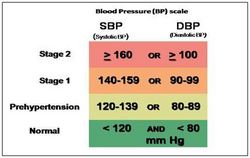
Prehypertension is clinical category created by experts in 2003 to describe patients whose blood pressure was elevated, but still considered within normal range. Hypertension or abnormally high blood pressure is a major risk factor for cardiovascular disease and strokes, but much less is known about the health threat posed of prehypertension, which is defined by a systolic pressure reading between 120 and 139 mmHg (the top number) and a diastolic reading between 80 and 89 mm Hg (the bottom number)

“The experts reasoned that, generally speaking, the higher the blood pressure, the greater the risk of death and disease, possibly starting from within the normal blood range,” said Bruce Ovbiagele, MD, professor of neurosciences at UC San Diego School of Medicine and senior author of the study.

However, Ovbiagele said, conclusive evidence was lacking, “so we decided to compile all the published studies in the scientific literature to date, and using statistical techniques find out if there is indeed a higher risk of future stroke in people with prehypertension, the extent of that risk, and whether particular characteristics were associated with higher stroke risk.”

The researchers identified 12 relevant prospective cohort studies of prehypertension. All of the studies were derived from the general population. Four were from the United States, five from Japan, two from China and one from India. Combined, the studies involved more than 518,000 participants and covered periods ranging from 2.7 years to 32 years, with stroke occurrences documented. The prevalence of prehypertension in the studies ranged from 25 to 46 percent. In the United States, it’s estimated roughly one-third of adults have prehypertension.

“Overall, people who had prehypertension (in the studies) were at a 55 percent higher risk of experiencing a future stroke than people without prehypertension,” said Ovbiagele. “This result held regardless of sex, race-ethnicity, blood pressure type (systolic or diastolic) or the type of stroke (ischemic or hemorrhagic).”

The health risk was measurably greater for those whose blood pressure levels were at the high end of the “normal” spectrum. “We found that those people who fell within the higher range of prehypertension were at 79 percent higher risk of experiencing a future stroke,” Ovbiagele said.

The findings should add clarity to the perceived health risk of prehypertension, said Ovbiagele. “Prehypertension has been controversial since its inception, with occasional accusations that it would not be used to diagnose sick people, but rather it would label healthy people whose blood pressure was towards the upper reaches of normal as unhealthy, without any compelling reason for doing so. Others complained that the new designation would needlessly expose people to blood pressure-reduction drugs, all to the benefit of pharmaceutical companies.”

Thomas Hemmen, MD, PhD, director of the UC San Diego Stroke Program and a neurologist at the UC San Diego Sulpizio Cardiovascular Center who was not involved in the study, described it as “ground-breaking.”

“Over the years, the blood pressure range identified as increasing stroke and cardiovascular risk has been lowered,” Hemmen said. “Now anything that’s above 115 is thought to increase risk. But we need more tools for diagnosing prehypertension. We need to learn more so that we can adjust risk and develop therapies. Hopefully, this study will lead to more research.”

Both Hemmen and Ovbiagele note little empirical evidence exists to show that taking blood pressure-reducing drugs can prevent future strokes. “There just haven’t been any large studies,” Hemmen said. On the other hand, both doctors say the new findings should encourage persons with high-but-normal blood pressure to change unhealthy behaviors.

“Young and middle-aged persons should check their blood pressure regularly. If they do fall into the higher range of prehypertension, they should take specific steps to modify their lifestyle, such as reducing salt intake and maintaining a normal weight,” said Ovbiagele. “Modifying one's lifestyle is relatively safe and could potentially lower not just the risk of future strokes, but possibly other complications of prolonged elevation of blood pressure, including heart attacks, heart failure and kidney disease.”

Story Source:

The above story is reprinted (with editorial adaptations by The Zestzfulness Team) from materials provided by the University of California – San Diego news Centre

Journal Reference:

M. Lee, J.L. Saver, B. Chang, K.-H. Chang Q. Hao and B. Ovbiagele. Presence of baseline prehypertension and risk of incident stroke A meta-analysis. Neurology, 2011 DOI: 10.1212/WNL.0b013e3182315234