Wednesday, April 17, 2013

1 Desecration


This is the flag of my country, Malaysia. 

My national flag comprises of a field of 14 alternating red and white stripes along the fly and a blue canton bearing a crescent and a 14-point star known as the Bintang Persekutuan (Federal Star).

The 14 stripes, of equal width, represent the equal status in the federation of the 13 member states and the federal government, while the 14 points of the star represent the unity between these entities.

The crescent represents Islam, the country's official religion; the blue canton symbolises the unity of the Malaysian people; the yellow of the star and crescent is the royal colour of the Malay rulers.

The flag represents the purpose and resolve of the nation. Protestors intentionally destroy, damage or mutilate a flag in public to make a political point against a country or its policies.

Thus when certain Malaysians of authority cut up my national flag and shape it to look like prick and then unashamedly stick their desecration all over the country, I am shocked and sad!

Up till today, these people proudly continue to shove into our senses their destruction of the very fabric of our country!

Friday, April 12, 2013

Heart Disease and Compound Found in Red Meat, Energy Drinks


Link Between Heart Disease and Carnitine

Carnitine, abundant in red meat and added as a supplement to popular energy drinks has been found to promote atherosclerosis -- or the hardening or clogging of the arteries.

Prior research has shown that a diet with frequent red meat consumption is associated with increased cardiovascular disease risk, but that the cholesterol and saturated fat content in red meat does not appear to be enough to explain the increased cardiovascular risks. This discrepancy has been attributed to genetic differences, a high salt diet that is often associated with red meat consumption, and even possibly the cooking process, among other explanations.

Carnitine and Fatty Deposits

The research by the Cleveland Clinic shows that bacteria living in the human digestive tract metabolize the compound carnitine, turning it into trimethylamine-N-oxide (TMAO).

TMAO is strongly linked with the build-up of fatty deposits in blood vessels, which can lead to heart disease and death.

Further, the research finds that a diet high in carnitine promotes the growth of the bacteria that metabolize carnitine, compounding the problem by producing even more of the artery-clogging TMAO.


Cardiovascular Health Benefits of Vegan, Vegetarian Diets 

Meanwhile, vegans and vegetarians have a significantly reduced capacity to synthesize TMAO from carnitine, which may explain the cardiovascular health benefits of these diets.


Caution with Carnitine Supplements

Carnitine is not an essential nutrient; our body naturally produces all we need, but it is also a dietary supplement available in pill form and a common ingredient in energy drinks. With this new research in mind, the researchers cautions there may be a risk to people taking carnitine supplements


###

The above story is based on the April 7, 2013 news release by Cleveland Clinic.

The research has been published online in the journal Nature Medicine:

Koeth RA et al. Intestinal microbiota metabolism of l-carnitine, a nutrient in red meat, promotes atherosclerosis. Nat Med, 2013; DOI: 10.1038/nm.3145

If it's all about the ICE CREAM...


An eye-opening civics lesson by a primary school teacher

The GE was heating up and some of the children in her Standard 3 class showed an interest.

So she decided to hold an election for a class monitor. The children chose their nominees. The nominees make a campaign speech and the class would vote.

There were many nominations and from those, a Scottish laddie named Najib  and Anwar, originally from Aberystwyth in Wales, were picked to run for the top spot.

"The class did done a great job in their selections. Both candidates were good kids.

I thought Anwar might have an advantage because he got lots of parental support.

I had never seen Najib's parents.

The day arrived when they were to make their speeches.

Anwar went first.

He had specific ideas about how to make our class a better place. He ended by promising to do his very best.

Everyone applauded and he sat down.

Now is was Najib 's turn to speak.

His speech was concise. He said, "If you will vote for me, I will give you ice cream." He sat down.

The class went wild. "Yes! Yes! We want ice cream."

He surely would say more. He did not have to.

A discussion followed. How did he plan to pay for the ice cream? He wasn't sure. But no one pursued that question. They took him at his word.

Would his parents buy it or would the class pay for it...He didn't know.

The class really didn't care. 

All they were thinking about was ice cream...

Anwar was forgotten. Najib won by a landslide."


The Lesson:


If adults are going to act like these little kids in exercising their vote, thinking only about ice cream...........


Wednesday, April 10, 2013

Smoking immediately upon waking may increase risk of lung and oral cancer

Credit: www.nightwoodtheatre.net


'Wake-Up' Cigarette May Raise Risk for Lung, Mouth Cancers


The sooner a person smokes a cigarette upon waking in the morning, the more likely he or she is to acquire lung or oral cancer, a new study reveals.


Penn State researchers analyzed data from nearly 2,000 adult smokers who took part in the U.S. National Health and Nutrition Examination Survey. The participants provided blood samples and information about their smoking behaviour.


The investigators found that about 32% of the participants smoked their first cigarette of the day within five minutes of waking. Among the others, 31% smoked within 6 to 30 minutes, 18% smoked within 31 to 60 minutes, and 19% smoked more than an hour after waking.


Highest levels of cancer-linked substance found in blood of those who light up first thing in morning.


People who had a cigarette immediately after waking had higher levels of NNAL -- a byproduct of a tobacco-specific cancer-causing substance called NNK -- in their blood than those who smoked a half hour or more after waking, regardless of how many cigarettes they smoked in a day, the study authors reported.


The research team also found that NNAL levels in the participants' blood was also associated with factors such as their age, their gender, the age they started smoking, and whether or not another smoker lived in their home.


"Most importantly, we found that NNAL level was highest among people who smoked the soonest upon waking, regardless of the frequency of smoking and other factors that predict NNAL concentrations," study co-author Steven Branstetter, an assistant professor of biobehavioral health, said in a Penn State news release.


"We believe these people who smoke sooner after waking inhale more deeply and more thoroughly, which could explain the higher levels of NNAL in their blood, as well as their higher risk of developing oral or lung cancer," he added. "As a result, time to first cigarette might be an important factor in the identification of high-risk smokers and in the development of interventions targeted toward early morning smokers."


###


The above story is based on the March 29, 2013 news release by Penn StateUniversity.


The study was published in the journal Cancer Epidemiology, Biomarkers and Prevention:


Branstetter SA, Muscat JE. Time to First Cigarette and 4-(Methylnitrosamino)-1-(3-Pyridyl)-1-Butanol (NNAL) Levels in Adult Smokers; National Health and Nutrition Examination Survey (NHANES), 2007–2010.Cancer Epidemiol Biomarkers Prev April 2013 22:615-622; doi:10.1158/1055-9965.EPI-12-0842


More information


The U.S. National Cancer Institute has more about the harms of smoking.


A Sight for Sore Eyes!

When you are drowning in a sea of "blue" well before nomination day for the 13th general elections, this solitary banner is a truly sight for sore eyes.


Monday, April 8, 2013

Walking Can Lower Risk of Heart-Related Conditions as Much as Running


Credit: www.active.com

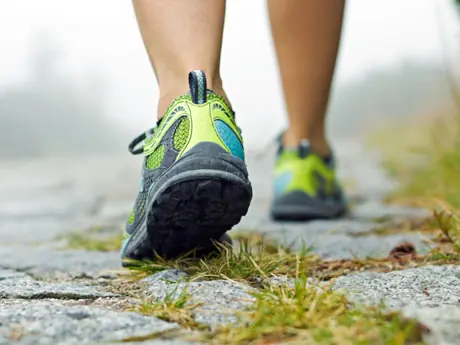
Walking briskly can lower your risk of high blood pressure, high cholesterol and diabetes as much as running can.

Researchers analyzed 33,060 runners in the National Runners' Health Study and 15,045 walkers in the National Walkers' Health Study. They found that the same energy used for moderate intensity walking and vigorous intensity running resulted in similar reductions in risk for high blood pressure, high cholesterol, diabetes, and possibly coronary heart disease over the study's six years.

"Walking and running provide an ideal test of the health benefits of moderate-intensity walking and vigorous-intensity running because they involve the same muscle groups and the same activities performed at different intensities," said Paul T. Williams, Ph.D., the study's principal author and staff scientist at Lawrence Berkeley National Laboratory, Life Science Division in Berkeley, Calif.

Unlike previous studies, the researchers assessed walking and running expenditure by distance, not by time. Participants provided activity data by responding to questionnaires.

"The more the runners ran and the walkers walked, the better off they were in health benefits. If the amount of energy expended was the same between the two groups, then the health benefits were comparable," Williams said.

Comparing energy expenditure to self-reported, physician-diagnosed incident hypertension, hypercholesterolemia, diabetes and coronary heart disease, researchers found:

  • Running significantly reduced risk for first-time hypertension 4.2 percent and walking reduced risk 7.2 percent.
  • Running reduced first-time high cholesterol 4.3 percent and walking 7 percent.
  • Running reduced first-time diabetes 12.1 percent compared to 12.3 percent for walking.
  • Running reduced coronary heart disease 4.5 percent compared to 9.3 percent for walking.
"Walking may be a more sustainable activity for some people when compared to running, however, those who choose running end up exercising twice as much as those that choose walking. This is probably because they can do twice as much in an hour," Williams said.

Study participants were 18 to 80 years old, clustered in their 40s and 50s. Men represented 21 percent of the walkers and 51.4 percent of the runners.

"People are always looking for an excuse not to exercise, but now they have a straightforward choice to run or to walk and invest in their future health," Williams said.


###

The above story is based on the April 4, 2013 newsrelease by American Heart Association.

These findings are reported in the American Heart Association journal Arteriosclerosis, Thrombosis and Vascular Biology:
Williams PT, Thompson PD. Walking Versus Running for Hypertension, Cholesterol, and Diabetes Mellitus Risk Reduction. Arterioscl Thromb Vas, April 4 2013 DOI: 10.1161/ATVBAHA.112.300878

###


See also our earlier report on